Parent communication is a big deal for our young learners. Our students rely on parent-teacher partnerships that help them grow their skills and feel excited about learning. As teachers, we encounter all kinds of families with varying degrees of knowledge, motivation, and confidence when it comes to supporting their child’s education; but I think you’ll find that most are very open to following through when teachers give at home reading tips so families can feel successful.

Looking for some simple tips to send to parents to get them engaged in their children’s reading at home? I have some key ideas to keep a strong communication when it comes to supporting parents while they support student reading.
Step 1: Pick a Method for Delivering Regular Tips
- Many teachers like to send home a weekly newsletter, calendar, or agenda in a student folder that comes back and forth.
- Other teachers might send home a weekly email or keep parents updated in google classroom.
- A personal favorite of mine is Class Dojo. I send parents tips each week through class dojo (there are tons of other apps like Remind, Bloomz, and Nearpod). Not only is it a great way to send information, but you can also see when parents have read the tips, and they can message you back if there are further questions. It’s all in one place, on one platform.

Step 2: Keep it Simple
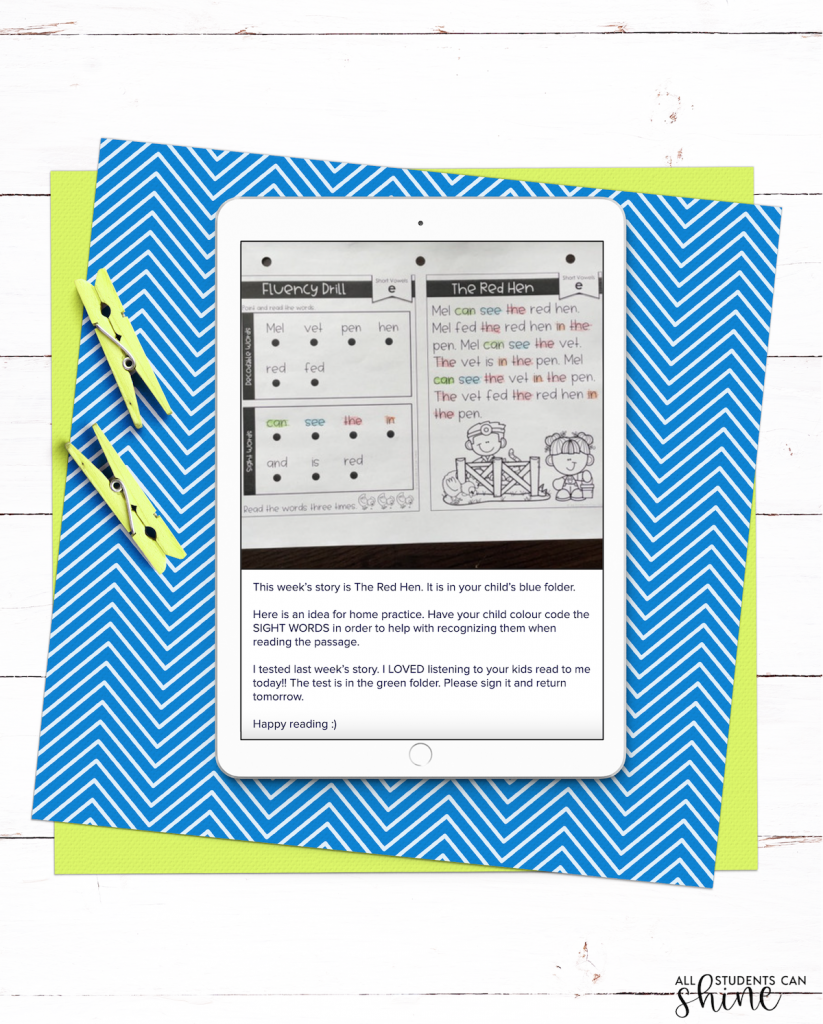
Parents may get very eager to help their child address several skills at once, but our little ones learn better one step at a time. I like to send home weekly phonics decodable readers {read more about them here}, and share just one tip or skill to practice for each story. I label these “Home Tips” in my class Dojo messages.
Not all parents understand how little minds develop and how long young children can realistically be expected to focus on academic work. This is particularly true of our younger learners who have not been in an educational setting like this before. Set boundaries for families by being specific about what their child is practicing, and give them time limits (i.e: 10-15 minutes) so parents and kids aren’t hitting that frustration level unintentionally.
Step 3: Set Parents and Students Up for Success
Help parents out by scripting exactly what to do. Directions should start with specific verbs for parents and their students. Instead of telling them to “practice”, help them know exactly how to use resources with verbs like “Say”, “Color”, “Read” etc…
Break the week’s tasks down into manageable steps. Especially at first when you are just beginning with this type of practice, parents are going to need just as much guidance from you as their children, but once they get into a groove, it will become easier and easier as the school year goes on.
Share tips for parents to know what to look for, and simple strategies to help. For example: It’s common for children to memorize short readers after we’ve practiced them in class and at home. Telling parents to remind children to use their fingers to track the words will ensure that they are practicing their reading and fluency skills with one-to-one correspondence.
If you are noticing a reading behavior or skill that needs improvement, this is also a great place to share with parents how they can help their children get on track.

Step 4: Going Beyond Extra Practice
Want some reading tips to send home to parents beyond daily homework? I created this FREE resource that shares all kinds of tips parents can use to encourage reading and practicing sight words at home.
It includes a couple of the tips already listed in this post, and shares lots of other valuable things they can do at home.
It also includes some of my favorite websites where students can access FREE literacy resources… Who doesn’t love a valuable FREEBIE?
Check out the decodable readers and themed readers for your students. These are a huge hit with both my students and their parents for at home reading!