If your math centers feel loud, messy, or more work for you than your students, you’re not alone.
Math centers can either be the most productive part of your math block… or the most overwhelming. The difference usually isn’t the activities. It’s the structure behind them.
When math centers are planned with intention, they:
- Give you consistent small group time
- Make differentiation manageable
- Reduce behavior issues
- Increase student independence
- Make assessment easier
Let’s walk through how to make math centers effective, efficient, and sustainable in a busy K–2 classroom.
5 Simple Tips for Stress-Free Math Centers
1. Choose Skills That Need Review (Nothing Brand New)
Centers are for practice — not first exposure.
Students feel more confident and independent when they’re reviewing previously taught skills. That independence is what allows you to successfully pull small groups.
If you introduce brand-new content in centers, you’ll spend your entire rotation answering questions.
Easy Differentiation Idea:
Use the same game format, but adjust the numbers or complexity.
For example:
- Group A: Addition within 10
- Group B: Addition within 20
- Group C: Two-digit addition without regrouping
You can also:
- Color-code levels
- Add a “Challenge Card” for early finishers
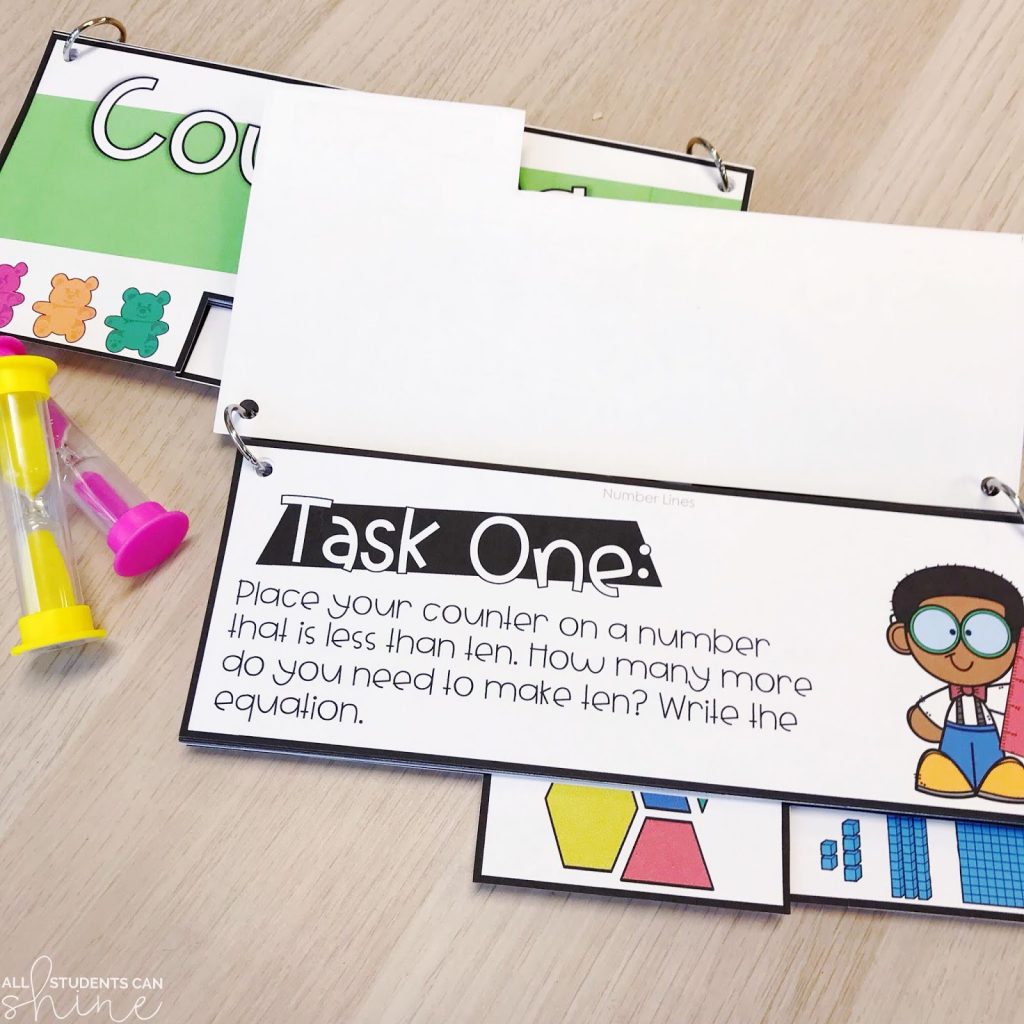
- Include a reteach version with number lines or manipulatives
Keep the structure the same. Change the numbers.
2. Choose Activities With Clear, Simple Directions
Students should spend their time practicing math — not trying to decode instructions.
The best center activities:
- Matching games
- Sorting tasks
- Simple board games
- Spin and solve
- Roll and record

If you need to explain something more than once after modeling, it may be too complicated for independent centers.
As students become more confident, you can add an extra step to increase rigor. Start simple. Build from there.
3. Keep Rotations Short
Shorter rotations keep engagement high and behavior issues low.
For K–2, 10–15 minutes per rotation works well.
Long games lead to:
- Off-task behavior
- Arguing
- Rushing at the end
Projecting a timer on the board helps students manage their time. It also reduces the number of “How much longer?” interruptions.
Centers are focused practice time — not free play.
4. Practice Routines Before You Add Academic Rigor
The first weeks of school (and right after breaks) should focus on procedures, not content.
When introducing centers:
- Use whiteboards
- Simple card games
- Basic manipulatives
The goal is practicing:
- Getting materials
- Choosing a seat
- Partner voice levels
- Cleaning up
- Rotating correctly
Once routines are smooth, then introduce academic games.
Strong procedures make everything else possible.
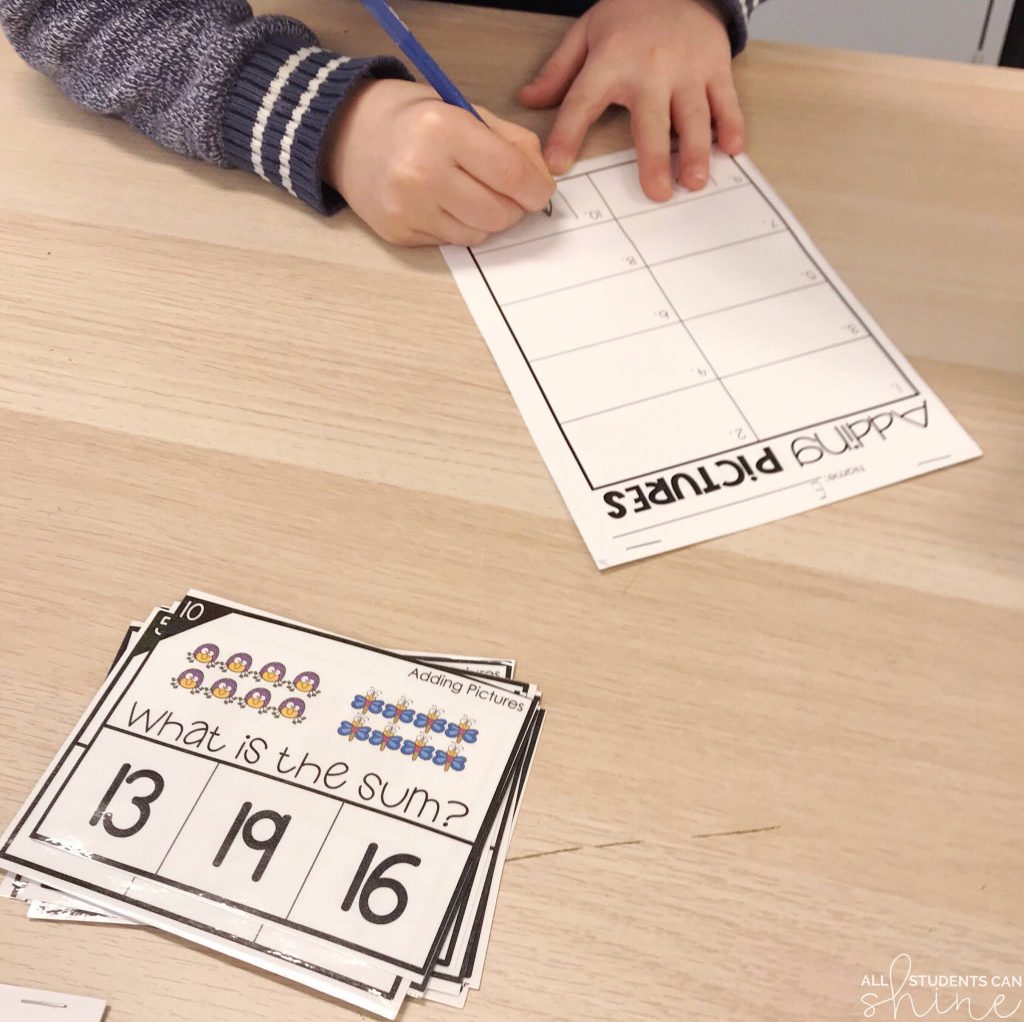
5. Designate a Teacher Table
Some center activities require more support. Save those for your teacher table.
Start each rotation by getting your teacher table group settled first. Once they’re on task, circulate briefly to scan the room.
Your teacher table is where:
- You reteach
- You push advanced learners
- You observe closely
- You ask probing questions
Centers give you built-in small group time every day.
How I Organize My Math Centers (So I’m Not Re-Planning Every Week)
The key to making centers sustainable is organization.
Here’s a simple system:
1. Numbered Bins
Each center has a number. Students rotate by number, not by activity name. This prevents confusion when activities change.
2. Master Rotation Checklist
Keep one tracking sheet to see:
- Which groups have completed which center
- Who needs extra practice
No guessing.
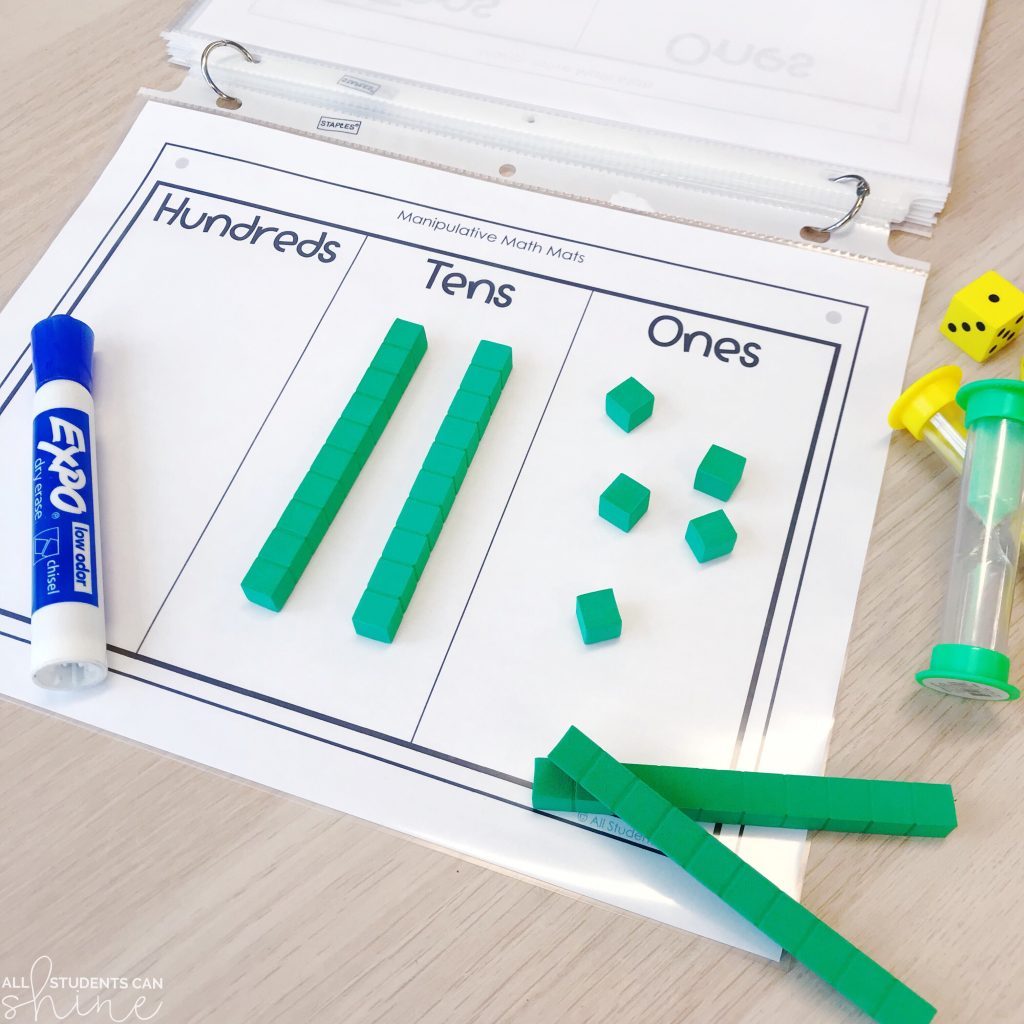
3. Reusable Recording Sheets
Place recording sheets in plastic sleeves. Students use dry-erase markers. No piles of papers to grade.

4. Digital Organization System
Create folders in Google Drive:
Math → Centers → Skill (Addition Within 20, Place Value, etc.)
Store:
- Printable masters
- Recording sheets
- Answer keys
Next year, everything is ready. No searching through old files.
5. QR Codes for Directions (Optional Tech Upgrade)
Record yourself explaining a game. Attach a QR code to the bin. Students can scan and rewatch directions without interrupting you.
What a Week of Math Centers Can Look Like
Here’s a simple structure that works well:
Monday:
Introduce skill whole group.
Tuesday–Thursday:
3 center rotations daily (10–15 minutes each).
Friday:
Quick assessment, math journal entry, or whole-group math game.
You don’t have to change centers every week. Keep them until all groups have completed each activity well.
Quality matters more than speed.

How to Keep Students Accountable During Math Centers
Clear expectations prevent most problems.
Try:
- Partner roles (Reader / Recorder)
- Voice level chart posted near centers
- “If You Finish Early” board
- Reflection sheet for misuse of materials
- Clear clean-up checklist
Teach these routines directly. Model them. Practice them.
If expectations are clear, behavior improves.

Math Centers FAQs
How often should I change math centers?
Change them once every group has completed each task successfully. That might be one week or two. There’s no need to rush.
How many students per group?
Two is ideal. Pairs tend to stay more focused and accountable. Groups of three often lead to one student doing most of the work.
Should math centers be graded?
No. Centers are practice time.
Instead:
- Take anecdotal notes
- Observe strategies
- Ask questions
- Use quick exit tickets when you need a grade
What do I do about early finishers?
Have a consistent plan:
- Challenge cards
- Math fact fluency practice
- Math journals
- Independent practice bin
Never let “I’m done” turn into wandering.
What if students argue during centers?
Re-teach partner roles. Practice how to disagree respectfully. If needed, switch partners. Most conflicts come from unclear expectations.
Final Thoughts
Math centers don’t have to feel chaotic or overwhelming.
When you:
- Focus on review skills
- Keep directions simple
- Limit rotation time
- Practice routines first
- Stay organized
They become one of the most productive parts of your math block.
You’ll gain meaningful small group time, your students will build independence, and math will feel more manageable for everyone.
Ready to Get Started?
If you’d like ready-to-print center activities designed specifically for K–2 classrooms, you can check out:
And if you want weekly center ideas, classroom systems, and practical tips for primary teachers, follow along on Facebook and Instagram.
Math centers should work for you — not the other way around.