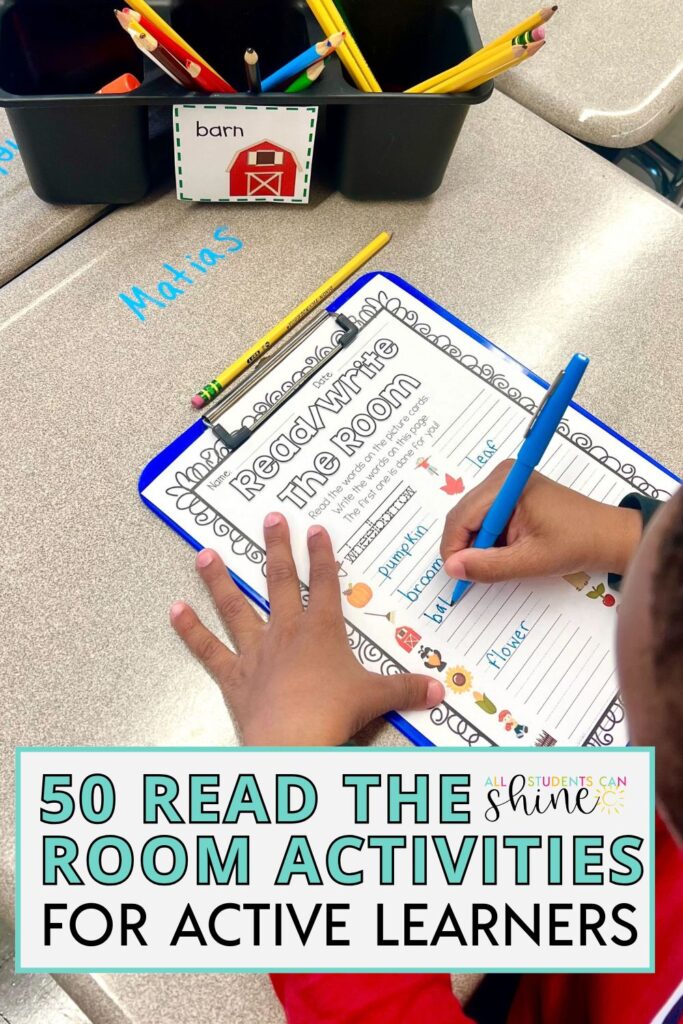
1st graders need to move—so let’s build learning into that movement. If you’ve got active learners (and let’s be real—most first graders fit that description), Read the Room activities are a simple, low-prep way to get kids up and moving while reinforcing phonics, vocabulary, and writing skills.
This post is packed with ideas for using Read the Room to build literacy in a way that’s fun, flexible, and manageable—even on a busy day.
What Is Read the Room?
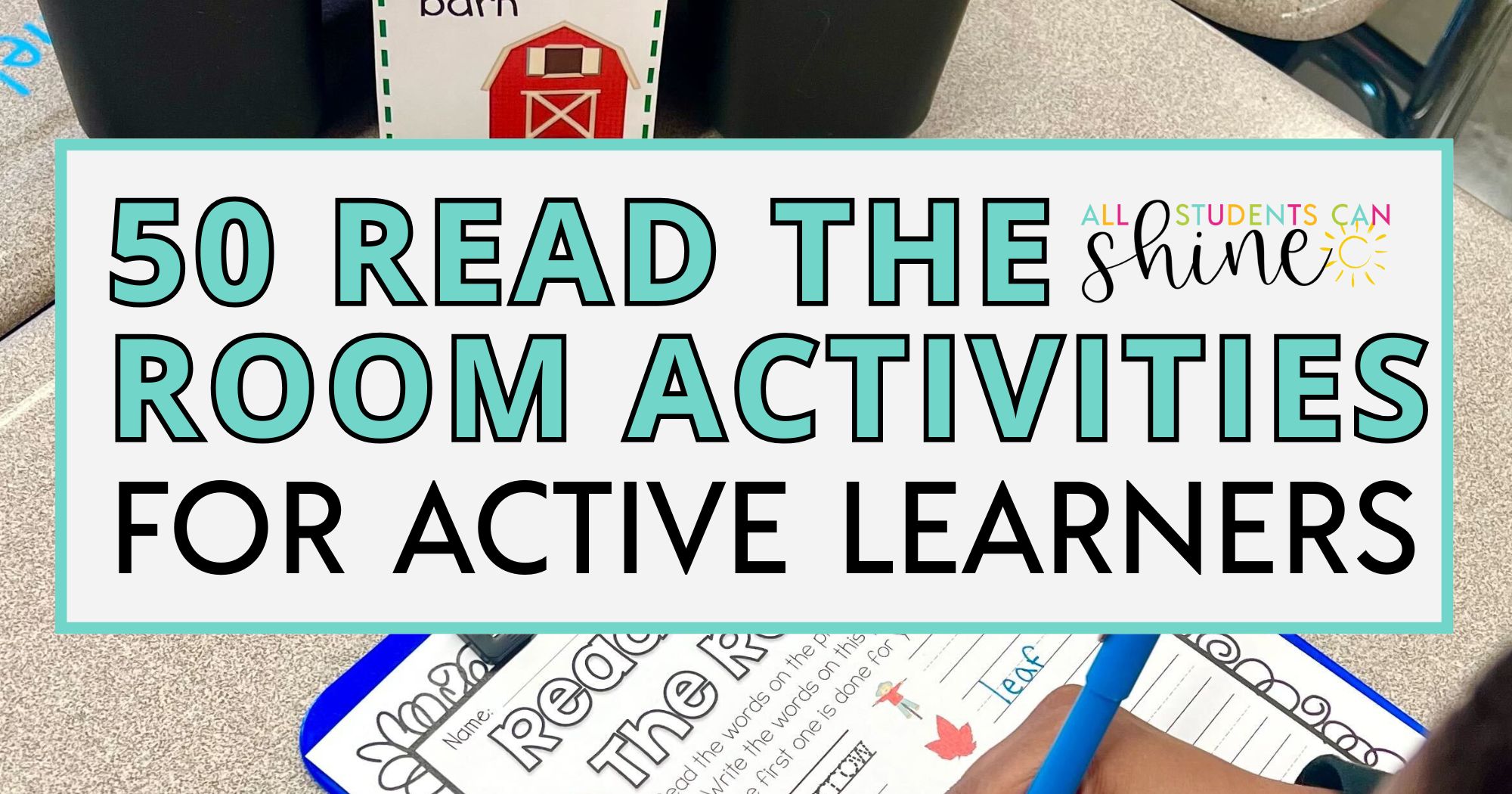
Read the Room is a movement-based literacy center where students walk around the classroom looking for themed word cards. Once they find a card, they write the word down on a recording sheet or in their notebook.
Think of it like a literacy scavenger hunt.
Students might be looking for:
- Sight words
- Spelling patterns
- Vocabulary from a story
- Themed words related to holidays, science, or classroom routines
It’s simple. It’s effective. And it’s often a classroom favorite.
Why Read the Room Works in 1st Grade
Read the Room works so well in first grade because it gives students a way to release energy in a purposeful, focused way. It’s especially effective for kinesthetic learners who thrive when movement is part of the learning process. Along the way, students strengthen vocabulary, phonics, and handwriting skills—without even realizing they’re working. The structure of the activity encourages independence while still maintaining clear routines and expectations. It’s versatile enough to use during centers, for early finishers, or as a transition between lessons. Best of all, it’s a low-prep option that can be used again and again in different ways throughout the year.
Themes That Keep Things Fresh
With the right themes, this center never gets old. Here are just a few you can rotate through the year:
- Seasons & Holidays: Fall, Winter, Valentine’s Day, Earth Day
- Classroom Life: Supplies, Recess, Birthdays
- Favorite Topics: Animals, Food, Places in Town
- School Subjects: Math, Science, Writing
- Jobs & People: Community Helpers, Professions
- Phonics Patterns: Short vowels, digraphs, blends
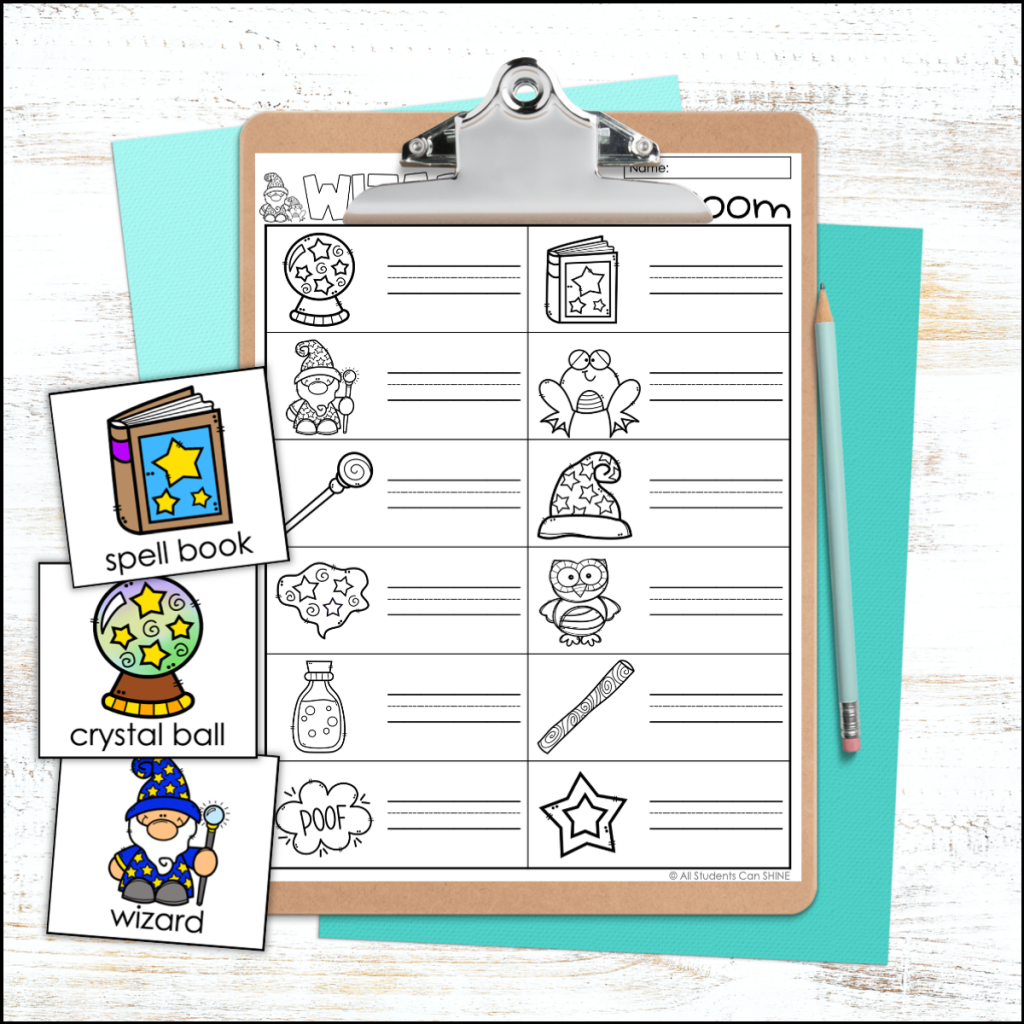


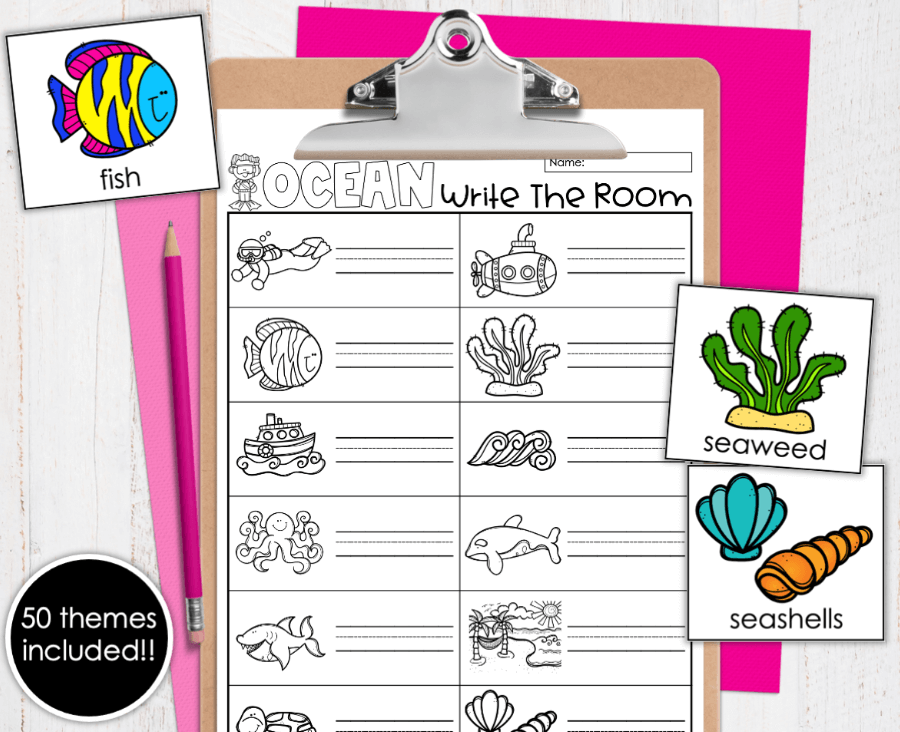
How to Set Up Read and Write the Room
1. Print & Prep
- Print 12 picture/word cards per theme
- Laminate and cut for durability
- Print a recording sheet for each student
2. Choose Placement Spots
- Spread cards around the classroom
- Avoid crowding—no traffic jams!
- Make off-limits areas clear

3. Set Expectations
- Will you have time-based or task-based goals?
- Will you use clipboards or folders for recording sheets?
- Teach routines before letting students work independently:
- Know where to turn in your paper when you’re done
- Work independently or with a buddy (based on need)
- Words don’t have to be written in order
- Use neat handwriting if it’s also handwriting practice
- Focus on finding and reading the words correctly
Ways to Differentiate for All Learners
- Assign fewer words for students who need more time
- Pair students for buddy work or peer support
- Reuse the word cards in another word work center
- Send extra sets home for practice
- Add a sentence-writing extension for advanced students
Try it Out in Your Classroom!
I have a Read the Room Freebie with three games that you can play all year round. The themes included are Birthday, Recess, and Farm, and will give you a bite sized example of what’s contained in the full 50-themed resource in my TPT Store that’s available for purchase to use all year long!