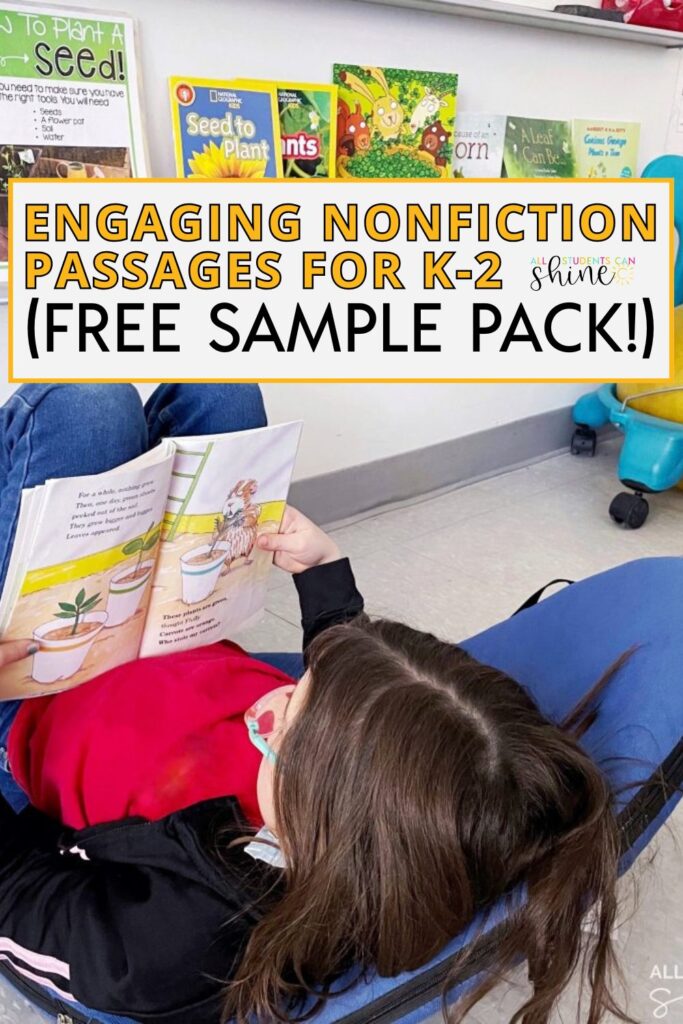
Picture books and fictional stories can be so much fun to read with primary students, but it’s also important to expose kids to plenty of nonfiction passages. Becoming familiar with informational texts is an important “real world” reading skill, and it prepares students for upper elementary and secondary school when much of their reading becomes nonfiction.
Let’s take a look at why it’s so important to teach with nonfiction resources, even with our youngest students.
Nonfiction Texts Complement a Child’s Natural Curiosity
Young children are like little sponges soaking up loads of input around them. They’re curious about so many topics. How do flowers grow? What does the life of a butterfly look like? Why are there clouds in the sky? How do polar bears find food in the Arctic?
In some ways, it’s easier to convince younger children to read informational texts than it is with high schoolers! Their minds are primed and curious, especially when you take into account each child’s unique interests.
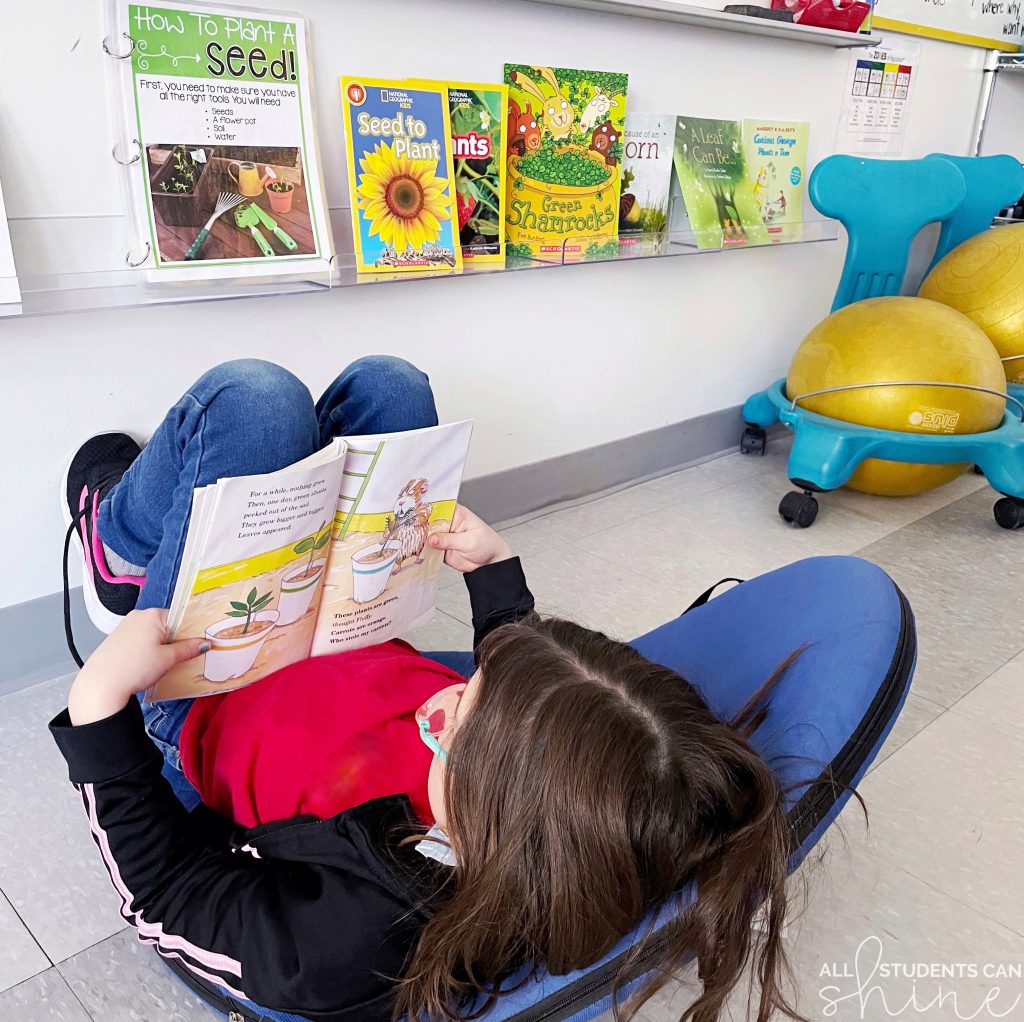
Nonfiction Passages Prepare Children for “Real Life” Reading
When’s the last time you read a book for fun? Hopefully it hasn’t been too long! But the reality is, grownups spend the majority of our time reading informational texts. News articles, instructions for the latest kitchen gadgets you’ve purchased, emails from your principal, announcements from the local government… we consume a ton of information!
By exposing children to this type of text early, we’re preparing them for success in the real world.
Secondary School Places a Large Emphasis on Informational Texts
Standardized tests and the Common Core curriculum have shifted away from literary analysis and on to more nonfiction, informational text analysis, especially at the secondary level. By teaching students how to approach these texts early on, we’re giving them a leg up for future school success.
Common Core in particular is geared toward preparing students for college and the workforce. That curriculum places an emphasis on teaching students to read informational texts like textbooks and manuals, since that’s what employers and college professors say is lacking.
Nonfiction Texts Introduce Students to a Wider Vocabulary
It’s amazing how many complex words little learners can pick up on by reading and exploring informational texts! Biodiversity, chrysalis, evaporation, plateau…
Reading informational texts with primary students not only exposes them to some pretty big ideas about the world around them, it also boosts their overall literacy. Nonfiction passages give us a chance to learn how to read graphs, diagrams, tables, and other graphic features.

Want ready-to-use nonfiction passages?
Grab your FREE sample pack with 10 engaging texts (2 levels included).
You Don’t Have to Start from Scratch
If you’re thinking, “Yes! I want to bring more nonfiction into my classroom — but I don’t have time to create it all from scratch,” I’ve got something that can help. I’ve been working on a set of ready-to-go nonfiction passages designed just for primary students.
A Closer Look at Nonfiction Passages for Primary Students
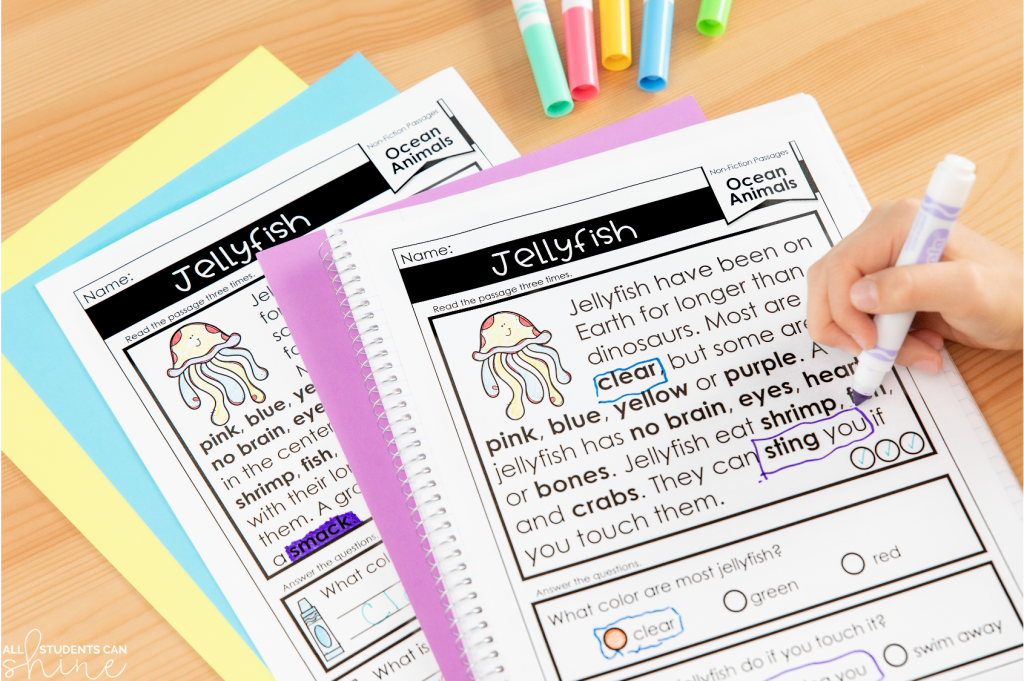
This animal-themed bundle includes 30 differentiated reading passages across 6 habitats. Every passage is written at two levels, making it easy to meet your students where they are.

Each passage includes:
- Level 1: 6–7 short, decodable sentences with age-appropriate sight words
- Level 2: 9–10 longer sentences with expanded vocabulary and more complex sentence structure
- Bolded vocabulary words to support content-area learning
- Comprehension questions (multiple choice for Level 1, short answer for Level 2)
- A built-in text evidence task, where students highlight their answers in the passage
These passages are designed to build confidence, support repeated reading, and make nonfiction less intimidating — even for your youngest learners.
Animal Topics by Habitat
Here’s a peek at the animals included in the full resource:
Polar Animals:
Penguin, Snowy Owl, Polar Bear, Caribou, Walrus
Rainforest Animals:
Toucan, Blue Morpho Butterfly, Jaguar, Sloth, Tree Frog
Ocean Animals:
Blue Whale, Lobster, Jellyfish, Sea Turtle, Seahorse
Grassland Animals:
Lion, Zebra, Elephant, Giraffe, Rhinoceros
Desert Animals:
Coyote, Camel, Armadillo, Golden Eagle, Meerkat
Wetland Animals:
Beaver, Dragonfly, Otter, Alligator, Heron
Download ten sample pages for free!
Try 10 leveled texts about penguins, polar bears, snowy owls, and more! Includes two reading levels and comprehension questions with text evidence practice.
Looking for more?
These polar animal passages are part of a full collection covering 6 habitats and 30 animals. Each passage is leveled, illustrated, and ready to print or assign digitally.
Explore the full Nonfiction Reading Passages Series here and save time planning!