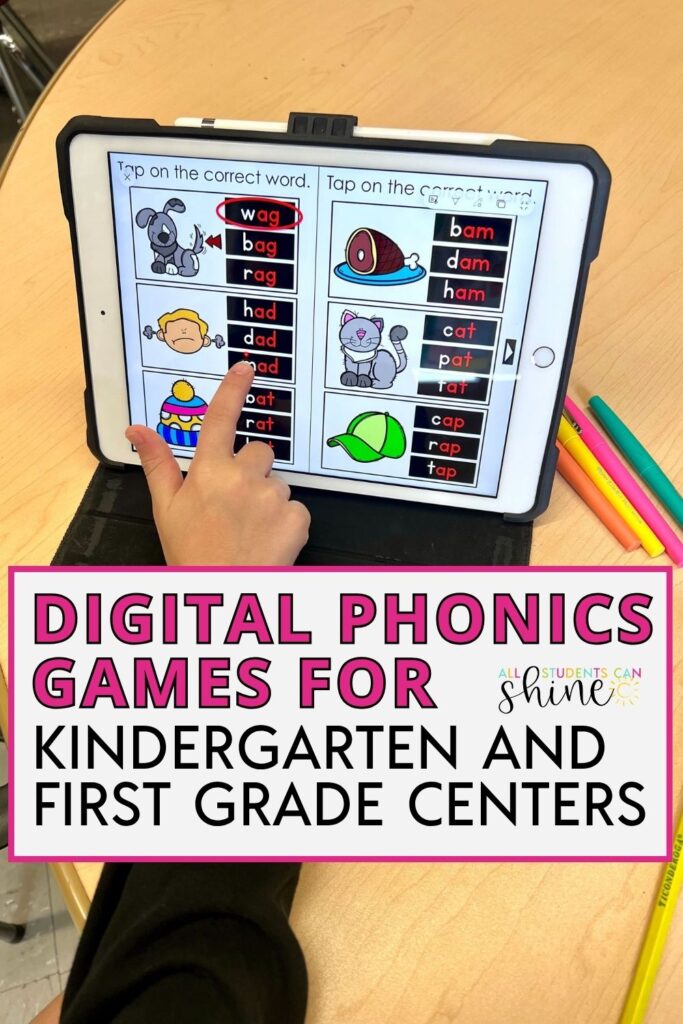
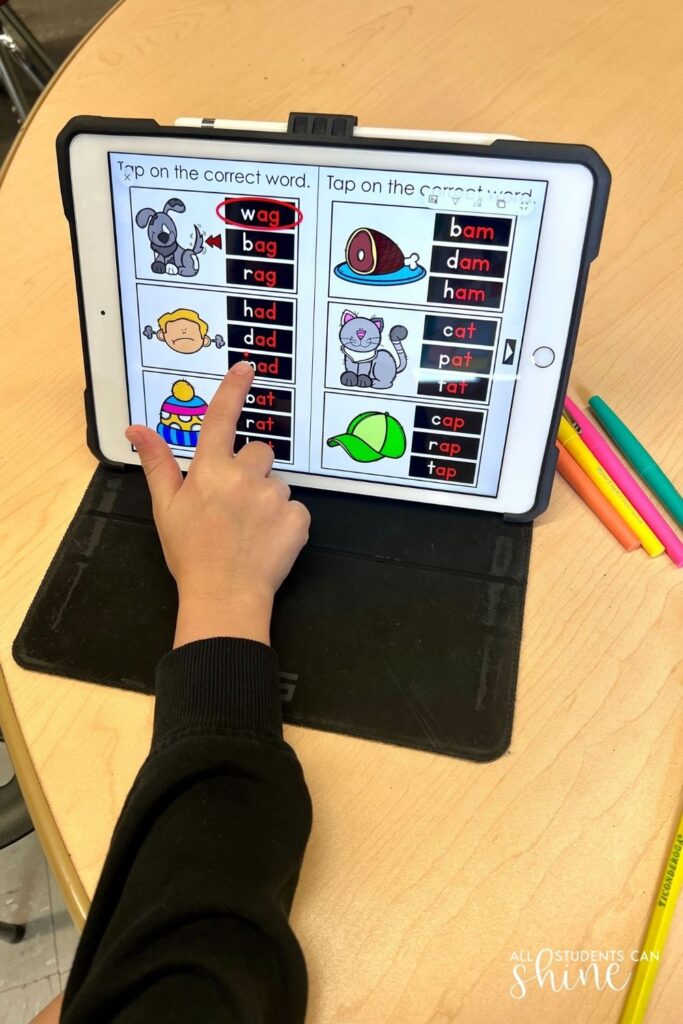
Digital phonics games are an easy, low-prep, and effective literacy center solution for kindergarten and first grade classrooms. Students get engaging phonics practice with immediate feedback while teachers save prep time, differentiate instruction more easily, and run smoother small groups during literacy block.
Literacy centers can feel overwhelming when students need constant help, materials get misplaced, or activities lose their excitement after a few uses. At the same time, kindergarten and first grade students need consistent phonics practice to build strong reading skills. That is why digital phonics games have become one of my favorite literacy center solutions. They are easy to prep, simple to manage, highly engaging for students, and most importantly, effective for building foundational phonics skills.
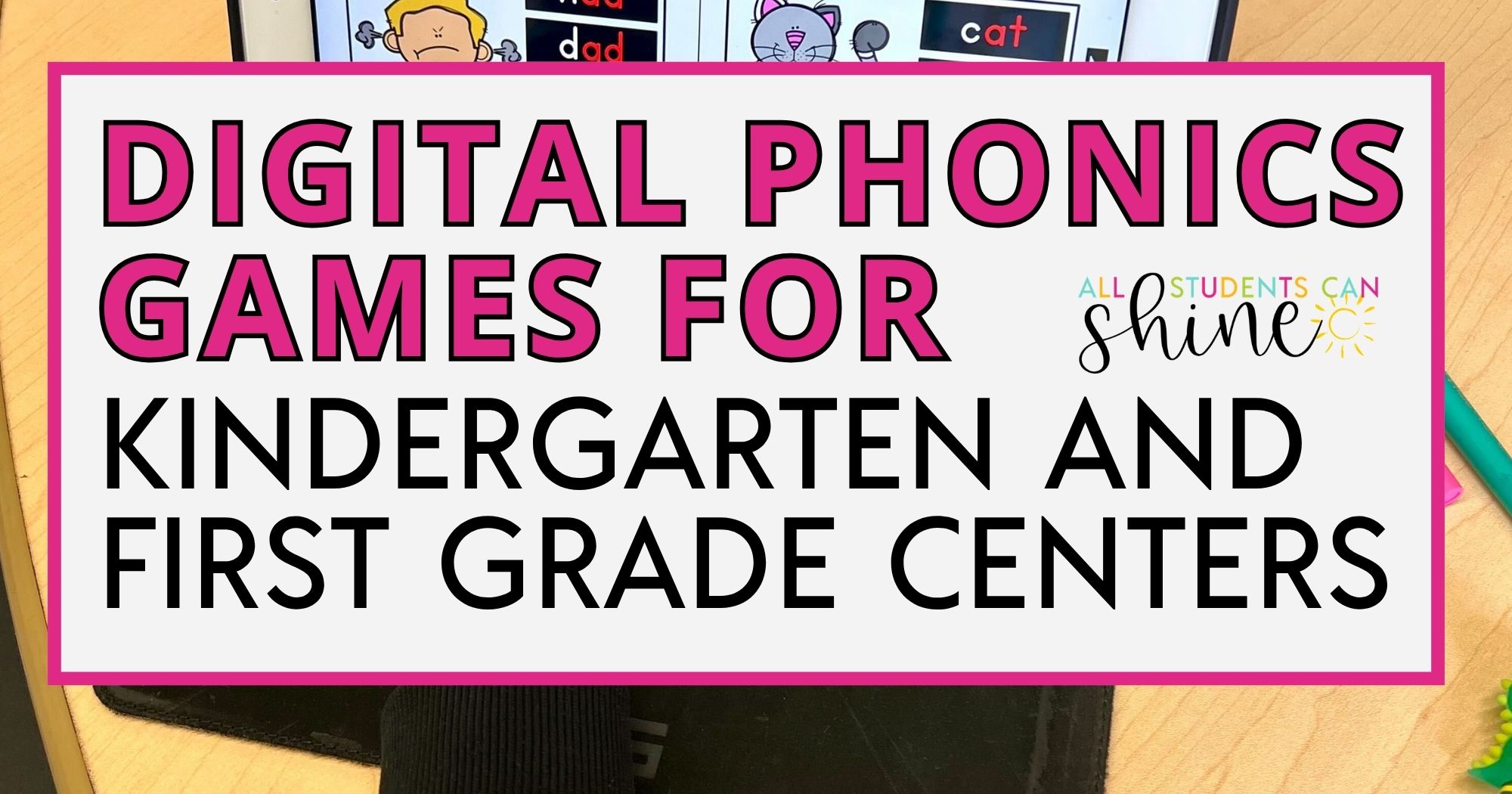
Whether students are practicing CVC words, digraphs, blends, or long vowels, digital phonics activities give students meaningful repetition while allowing teachers to focus on small group instruction.
What You’ll Learn
In this post, you’ll learn:
- Why digital phonics games work so well during literacy centers
- How digital phonics activities support reading development
- Ways to use digital phonics games independently
- Tips for differentiating phonics centers in kindergarten and first grade
- How digital literacy centers save teachers time during planning
Why Are Digital Phonics Games So Effective?
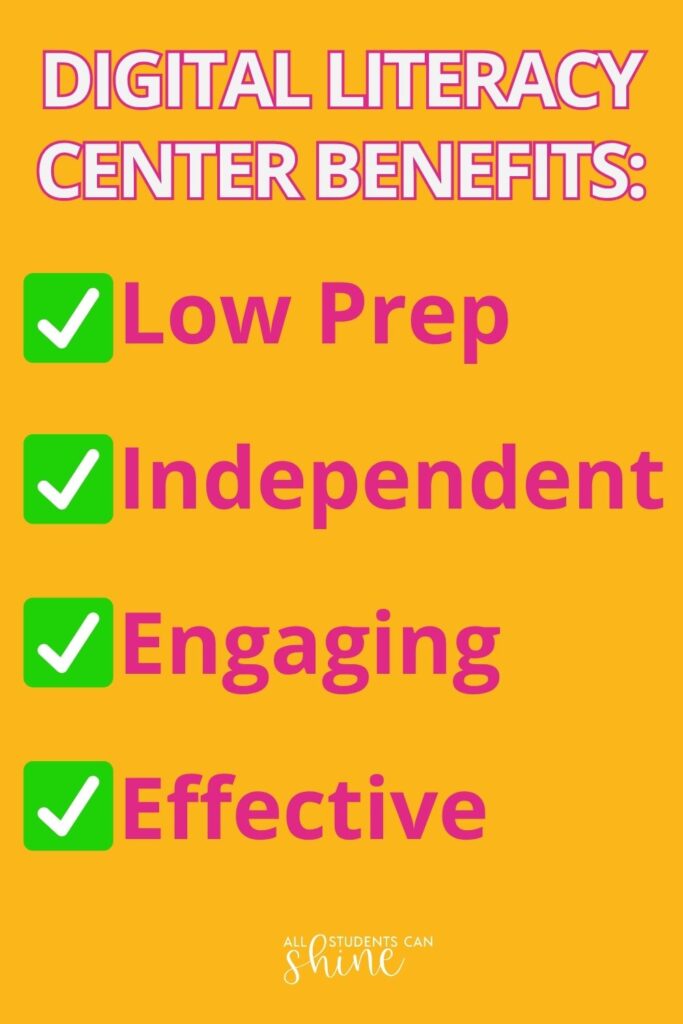
Digital phonics games work because they combine repetition, engagement, and immediate feedback.
Young readers need repeated exposure to phonics skills in order to build automaticity. Digital activities allow students to practice the same skill multiple times in an interactive format that feels motivating instead of repetitive.
Many digital phonics games also provide instant feedback, which helps students self-correct mistakes right away instead of practicing errors.
That immediate reinforcement can help students build confidence during independent literacy centers.
For teachers, digital phonics centers also reduce interruptions during small groups because students can navigate familiar activities independently after routines are introduced.
What Phonics Skills Can Students Practice With Digital Games?
Digital phonics games can support a wide range of literacy skills in kindergarten and first grade.
Kindergarten Phonics Skills
Students can practice:
- Letter identification
- Beginning sounds
- Ending sounds
- Rhyming
- CVC words
- Segmenting and blending sounds
- Short vowel practice
First Grade Phonics Skills
Students can practice:
- Digraphs
- Consonant blends
- Long vowels
- Silent e words
- Word families
- Decoding multisyllable words
- Reading fluency
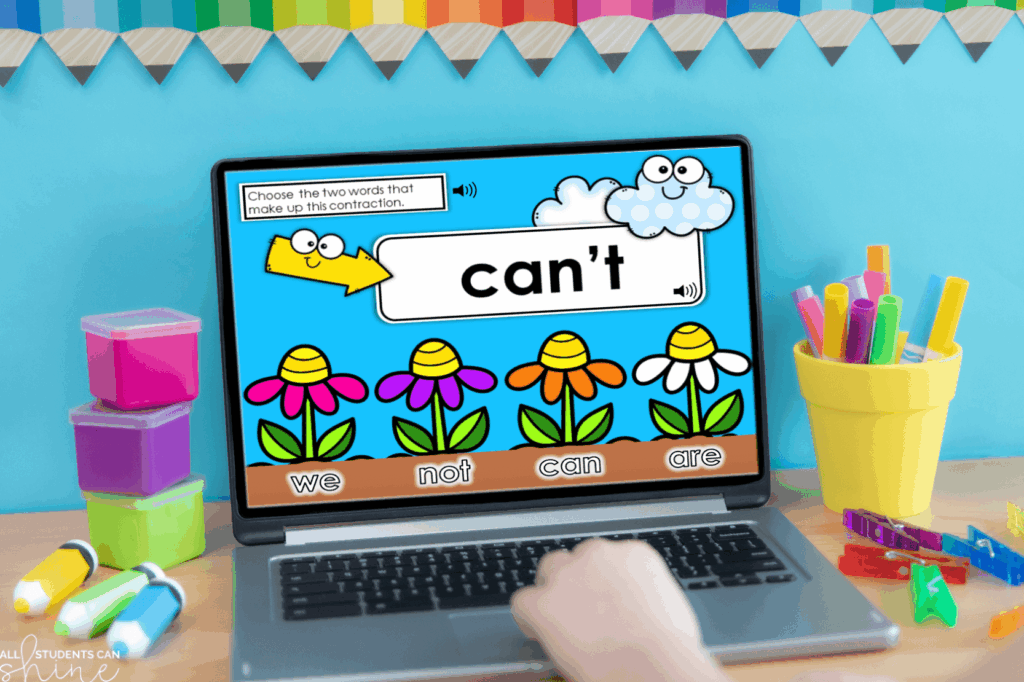
How Do You Use Digital Phonics Games During Literacy Centers?
One reason teachers love digital literacy centers is how easy they are to manage once routines are established.
Here are a few ways to make digital phonics centers run smoothly.
1. Model the Activity First
Before assigning a digital phonics game independently, practice it together as a whole class.
Students should know:
- how to log in
- how to start the activity
- how to submit answers
- what to do if they get stuck
Clear modeling reduces interruptions later.
2. Keep the Technology Simple
Students do best when the platform and directions stay consistent.
Instead of introducing a completely new center every week, rotate phonics skills within familiar digital formats.
That consistency helps students build independence faster.
3. Use Headphones When Possible
Headphones help students stay focused and reduce distractions during literacy rotations.
This is especially helpful when games include audio directions or sound practice.
4. Differentiate by Skill Level
One of the biggest advantages of digital phonics games is how easy they are to assign based on student needs.
Some students may practice:
- beginning sounds
- CVC blending
- short vowels
While others work on:
- vowel teams
- digraphs
- advanced decoding patterns
Differentiation becomes much easier without preparing multiple physical centers.
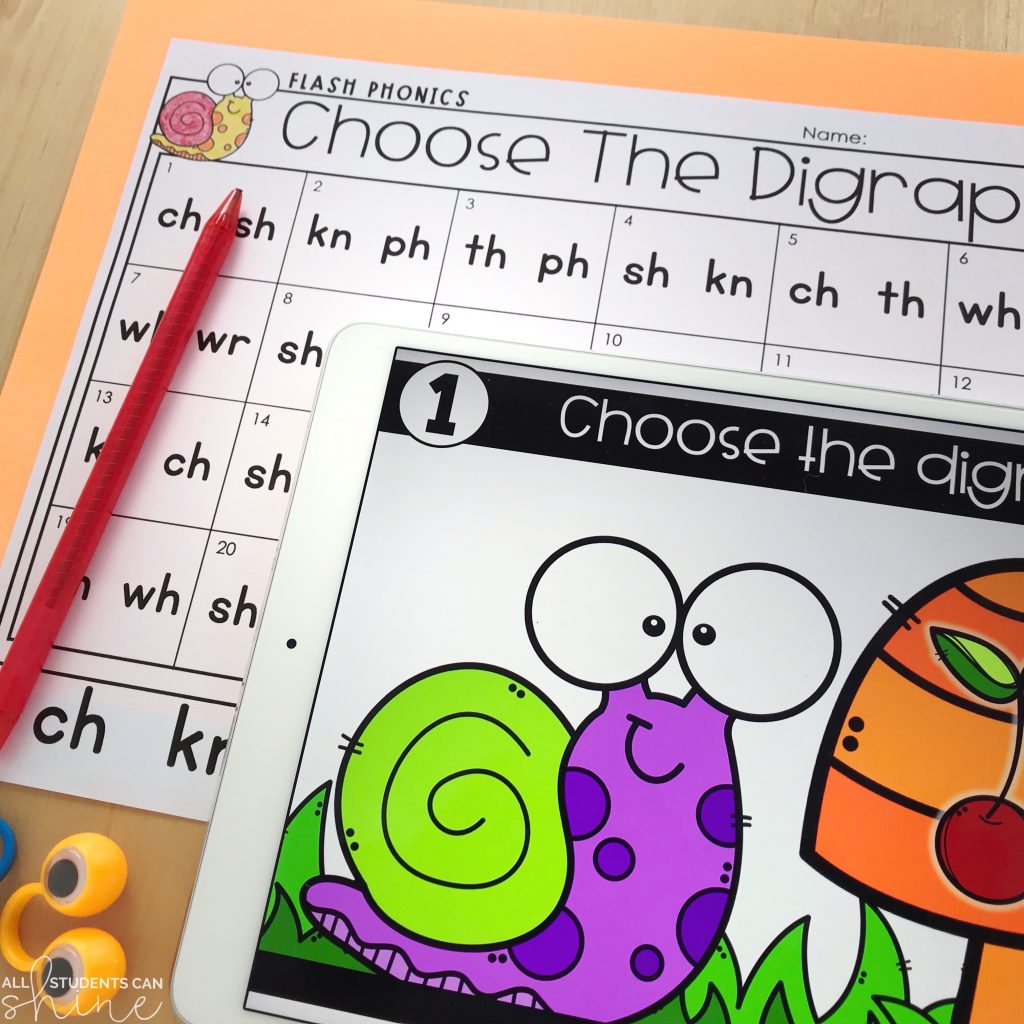
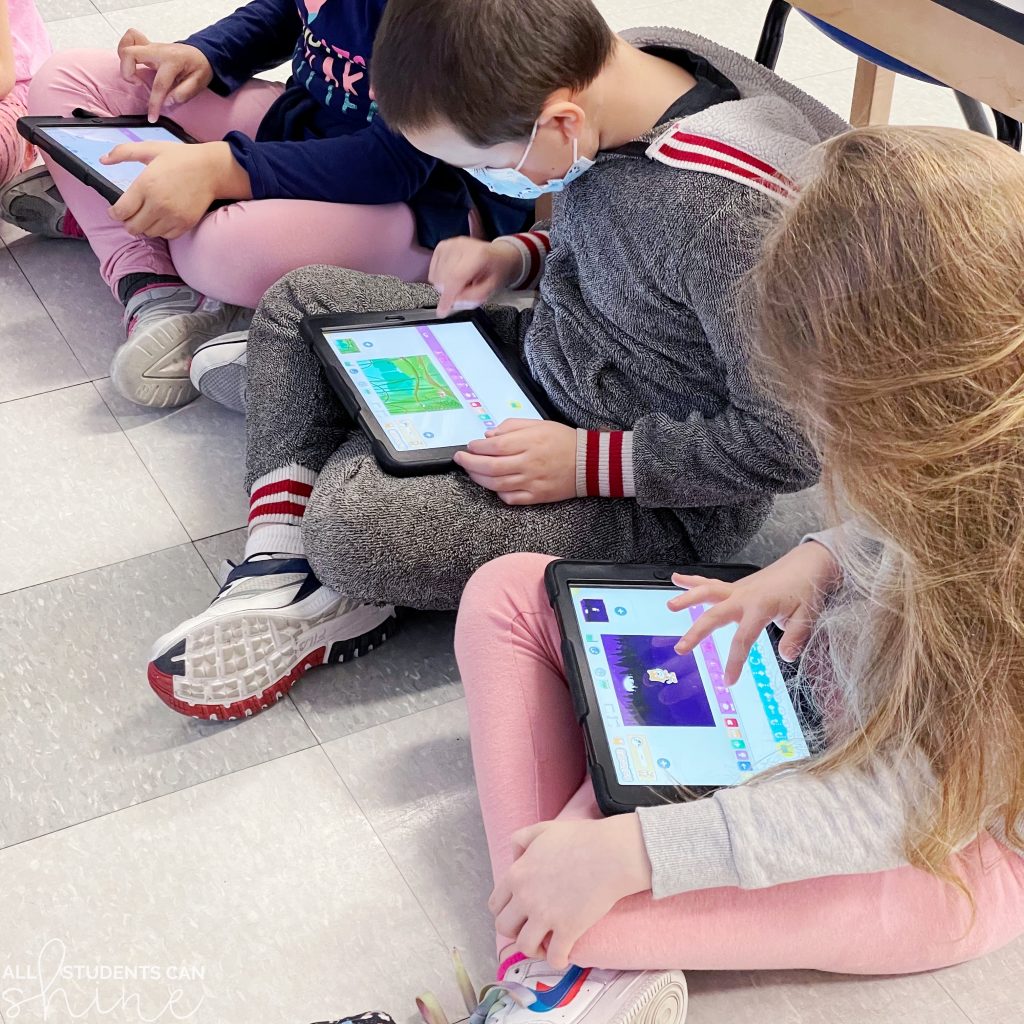
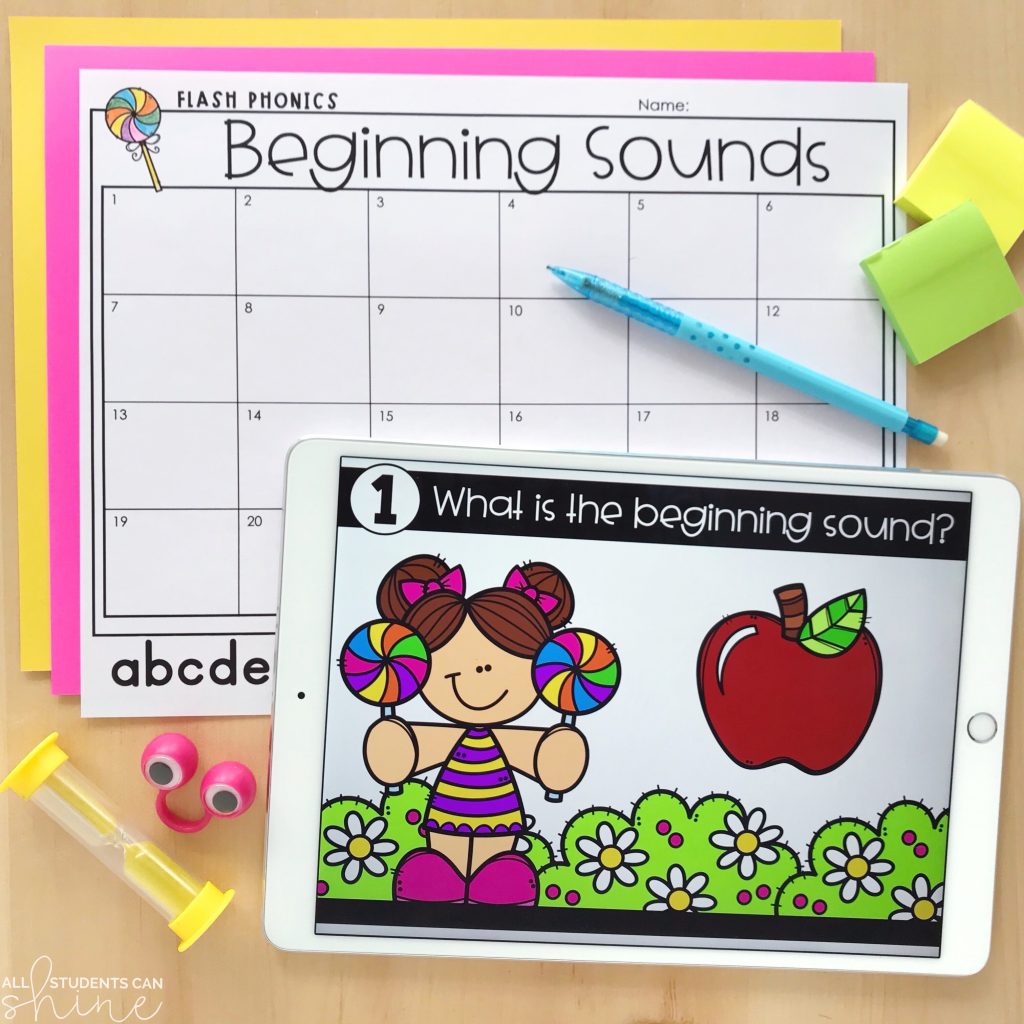
Why Teachers Love Digital Literacy Centers
Digital literacy centers help simplify literacy block planning.
Instead of printing, laminating, cutting, sorting, and storing materials each week, teachers can assign digital activities in just a few minutes.
Teachers also appreciate that digital phonics games:
- reduce prep time
- minimize cleanup
- support independent learning
- increase student engagement
- make differentiation easier
- provide reusable practice activities
For busy kindergarten and first grade teachers, that flexibility can make literacy centers much more manageable.
Are Digital Phonics Games Good for Independent Work?
Yes — digital phonics games can work extremely well for independent literacy centers when routines are taught clearly. Students often stay more engaged because digital activities feel interactive and provide immediate responses.
Many students also enjoy the visual and audio support included in phonics games, which can increase confidence during independent practice. When students know exactly how centers work, teachers can spend more uninterrupted time meeting with small groups.
How to Differentiate Digital Phonics Games
Differentiation is one of the biggest challenges during literacy block. Digital phonics games make it easier to meet students where they are without creating completely separate center systems.
For Struggling Readers
Assign games that focus on:
- letter sounds
- blending
- picture support
- simple decoding practice
For On-Level Readers
Students can work on:
- digraphs
- blends
- word families
- fluency practice
For Advanced Readers
Students may benefit from:
- vowel teams
- multisyllable decoding
- advanced phonics patterns
- word analysis activities
This flexibility allows every student to practice skills at the right level.
Teacher Tip
Start with one digital literacy center instead of changing every center at once. Even adding one consistent digital phonics rotation can reduce prep time and help students build stronger independent learning routines.
What are digital phonics games?
Digital phonics games are interactive literacy activities that help students practice decoding, blending, and phonics skills using computers or tablets.
Are digital phonics games effective for kindergarten students?
Yes. Digital phonics games can provide engaging repetition, immediate feedback, and independent practice opportunities that support early reading development.
Can first graders use digital phonics centers independently?
Most first grade students can complete digital phonics activities independently after routines and expectations are modeled clearly.
What skills can students practice with digital phonics games?
Students can practice letter sounds, CVC words, blends, digraphs, long vowels, word families, decoding skills, and fluency.
Why do teachers use digital literacy centers?
Teachers often use digital literacy centers because they reduce prep time, simplify differentiation, and help students work independently during small group instruction.
Browse Digital Phonics Games for Literacy Centers
If you are looking for easy, low-prep, and effective phonics practice for literacy block, the All Access Membership Library includes digital phonics games designed specifically for kindergarten and first grade students.
You’ll find interactive activities for:
- CVC words
- digraphs
- blends
- long vowels
- word families
- decoding practice
- and more
Browse the digital phonics games in the All Access Membership Library to find literacy center activities that fit your students’ needs.