Teaching math to young students can be tough, especially with multi-step math problems. But word problems are so important because they show how math applies to real life. While challenging, helping students learn to solve these problems is key to their math growth. Don’t worry, there are many helpful resources to make this easier for teachers and students. I am excited to share a new tool that can make math instruction fun and engaging. Let’s get started!
Why We Want to Give Students Lots of Exposure to Word Problems
Start them young! Giving students plenty of practice with word problems and multi-step math problems helps in many ways. First, it shows how math concepts apply to real life, making what they learn more relevant and meaningful.
Word problems also build critical thinking and problem-solving skills. Breaking down problems into steps helps students analyze information, recognize patterns, and find solutions. These skills are important beyond math.
Plus, solving word problems boosts reading comprehension. Since the problems often involve complex language, students need to understand what they are reading to solve them. Keep teaching these skills and you will see your students succeed in math and beyond!
How Do We Get Our Students Ready for Multi-Step Math Problems?
Before we start working on word problems, we need to make sure our students understand the math concepts involved. For example, they should be comfortable with addition and subtraction before trying related word problems. They also need some practice with single-step problems before moving on to multi-step math problems.
Understanding the concepts is just the first step. To help students succeed, we need to give them lots of opportunities to practice. Activities with manipulatives, visual aids, and gradually more challenging problems can build their confidence and skills.
Common Multi-Step Math Problem Challenges
Even with good strategies, word problems can still be tricky for students. One common issue is vocabulary. Many word problems include unfamiliar words or phrases, making it hard for students to understand without prior knowledge. For English Language Learners or students with different needs, it’s especially important to introduce key vocabulary early.
Another challenge is that students may not have the real-life experience needed to understand certain problems. For example, calculating the cost of groceries might be hard for a student who has never been grocery shopping. For younger students, it’s helpful to start front loading concepts and vocabulary early in the year to build their background knowledge and understanding.
Strategies to Teach Multi-Step Word Problems
- Provide students with a list of key math vocabulary words and their definitions with interactive notebooks.
- Have vocabulary posters or other visual aids around the classroom.
- Read books and engage in conversations to provide students with prior knowledge of the information they may find in word problems.
- Practice, Practice, Practice! This can include working on problems as a class, in small groups, or independently. Teachers can also provide students with feedback on their work and offer additional support as needed.
Read more about conquering common primary grade math challenges.
Ready for a New Resource?
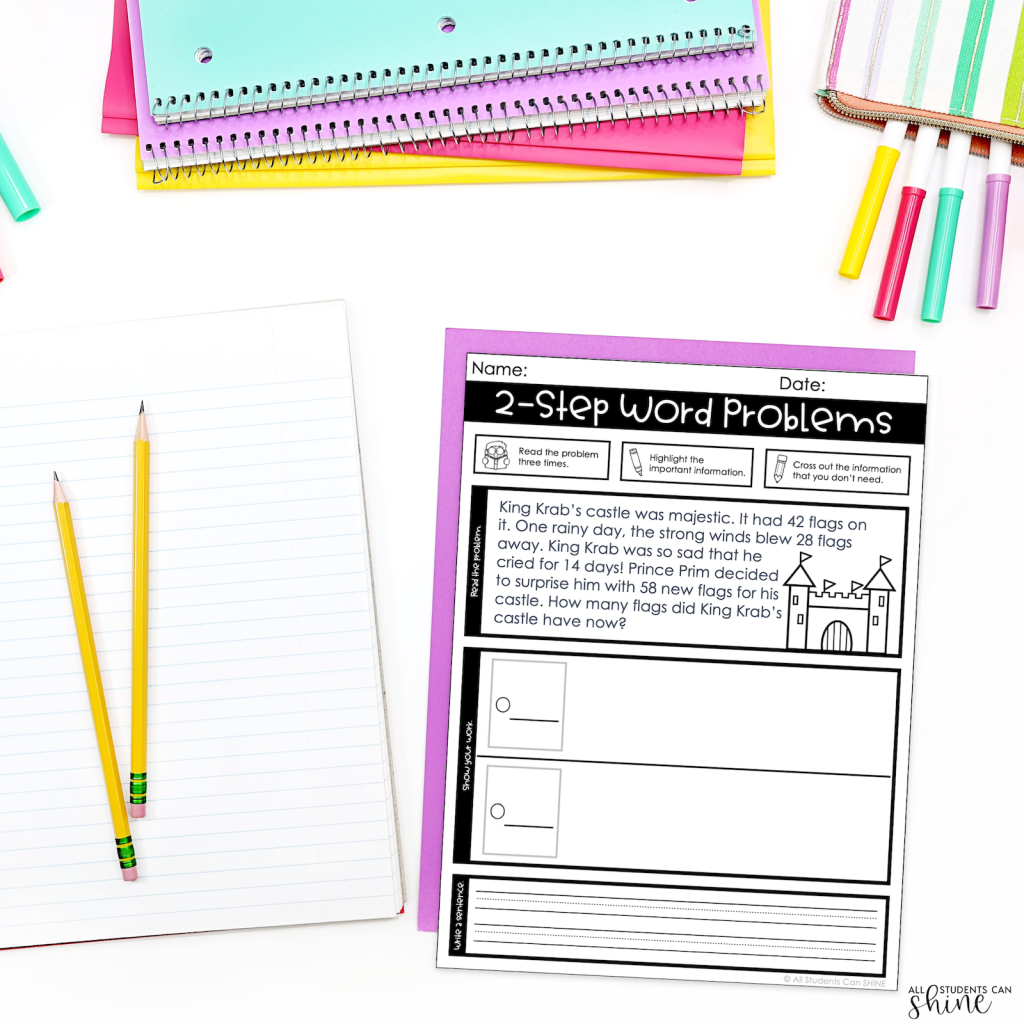
Are you looking for a fun and engaging way to help your students develop critical thinking and problem-solving skills in math? Look no further than the Multi-Step Math Problem Resource!
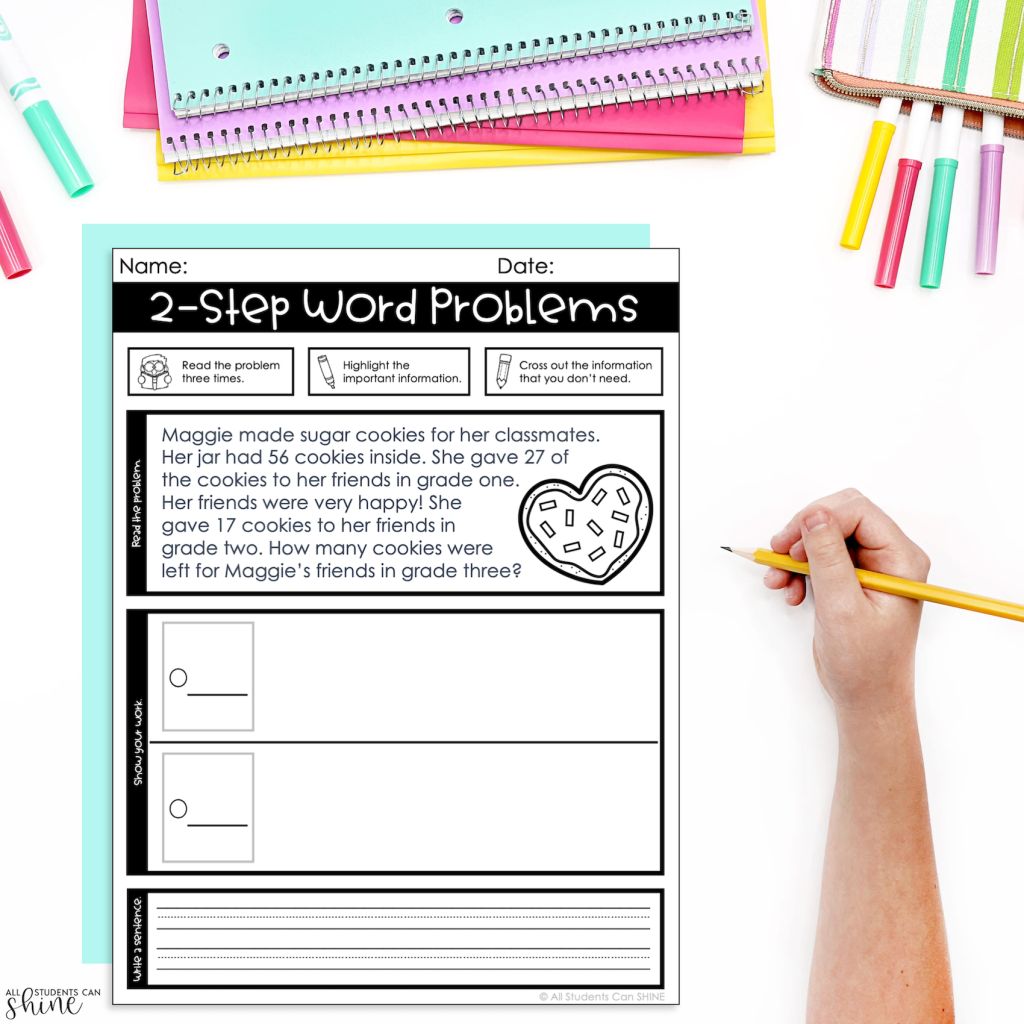
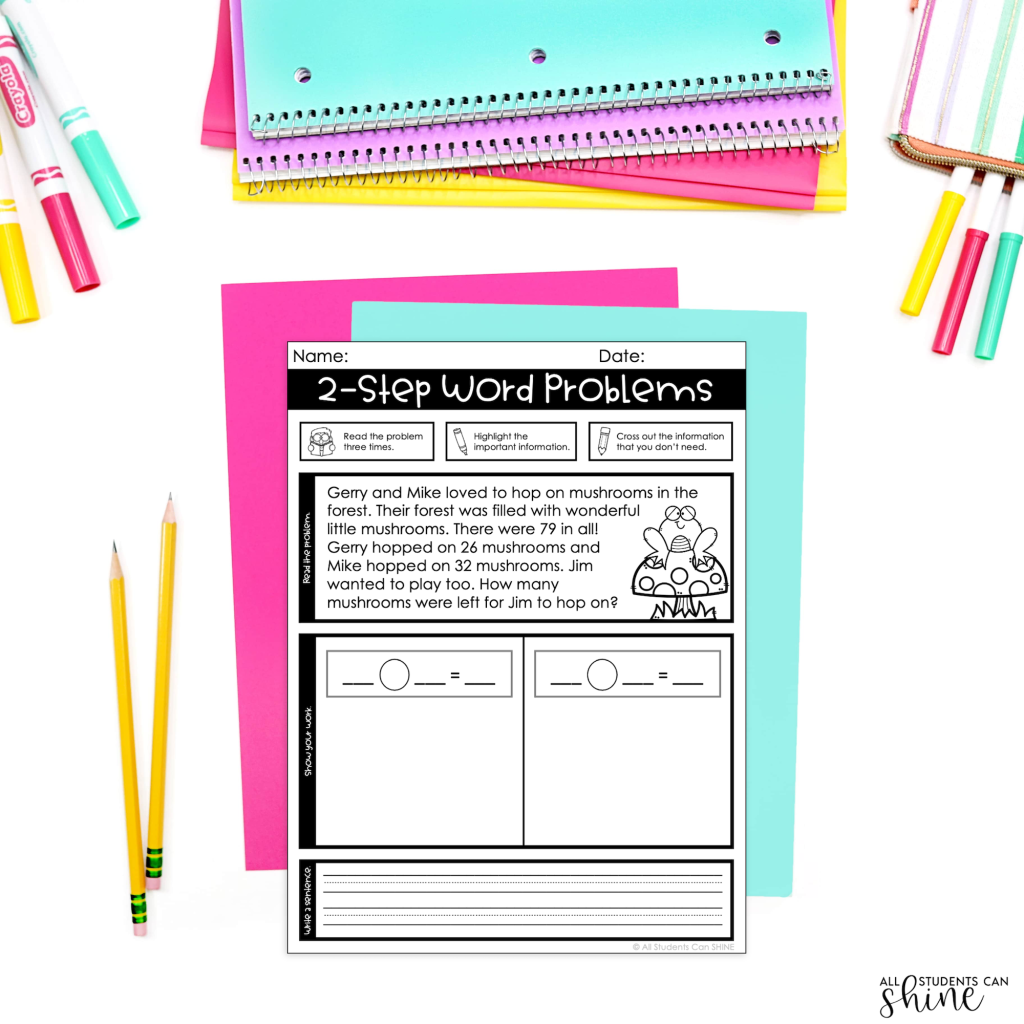
This resource includes 24 word-problems split into two groups of 12 regrouping problems and 12 without regrouping. Each group covers addition and subtraction, with three problems for each combination of addition and addition, addition and subtraction, subtraction and subtraction, and subtraction and addition.

These problems can be used in different ways, whether for whole-class lessons, small group work, extra practice, or homework.
Why this resource makes a difference:
- Promotes critical thinking and problem-solving in a fun way
- Supports mastery of multi-step addition/subtraction concepts
- Includes problems with and without regrouping for a well-rounded review
- Designed with different learning styles in mind, so every student can succeed
I’ve also included helpful strategies to address vocabulary and real-life experience barriers, making these problems accessible for all students.
Looking For More Math Resources For Your Class?