One of my teaching goals this year was to strengthen my writing block. Like many primary teachers, I often find that helping students write clear, organized narratives takes consistent modeling and structure.
At the start of the year, many of my students were writing sentences that didn’t connect into a full story. They had great ideas, but their writing often felt scattered. I wanted to find a simple way to help them organize their thinking so their stories actually made sense from beginning to end.
That’s when I introduced writing flipbooks into our Writer’s Workshop—and they quickly became one of the most effective tools in our writing block.
The Problem: Young Writers Need Clear Structure
A few months into the school year, I began teaching my students about beginning, middle, and end.
Most students started to understand the idea fairly quickly. However, some writers still struggled to see how those parts work together to form a meaningful story. They could label the parts, but their stories didn’t always follow a logical sequence.
I realized they needed a way to see each part of the story separately while still understanding how the pieces connect.
The Simple Strategy: Writing Flipbooks
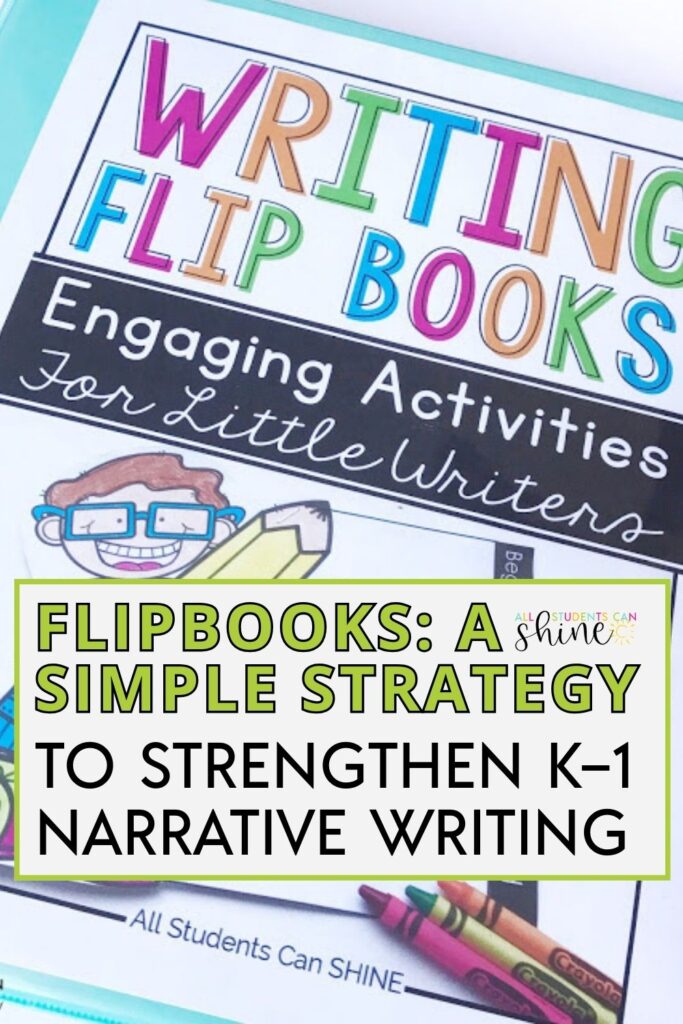
To make story structure more concrete, I created a simple flipbook with a separate page for each part of the story:
- Beginning
- Middle
- End
Breaking the story into separate pages made a big difference. My students could focus on writing one part at a time, while still seeing how each page contributed to their full story.
The moment we stapled the pages together and called it a book, motivation skyrocketed. Suddenly my students weren’t just writing sentences—they were authors creating their very first books.

Expanding the Strategy with Different Writing Structures
After seeing how well the first flipbooks worked, I started creating more versions that matched different writing skills we practice during the year.
Some of our most-used flipbooks include:
Narrative Writing
- Beginning, Middle, End
- Beginning, Middle, Middle, End
- First, Next, Then, Finally
- Somebody, Wanted, But, So, Then
Story Elements
- Setting & Character
- Problem & Solution
- Setting, Characters, Problem, Solution
Reading Response
- Comparing Characters
- Comparing Settings
- Making Connections
Informational Writing
- Writing Facts (1–2 facts)
- Writing Facts (1–3 facts)
- Writing Facts (1–4 facts)
- Writing Facts (1–5 facts)
These formats give students clear writing scaffolds while still allowing them to be creative.
Adding Covers for Engagement
To make the books even more exciting, I created a variety of themed covers students can choose from.

The covers match themes we study throughout the year, such as:
- Apples
- Snow
- Ocean
There are also seasonal and holiday options like:
- Halloween
- Christmas
- Valentine’s Day
Giving students a choice of covers adds a small element of ownership, which makes them even more excited to start writing.
How I Organize My Writing Flipbooks
Organization is key if you want students to use these independently during Writer’s Workshop.
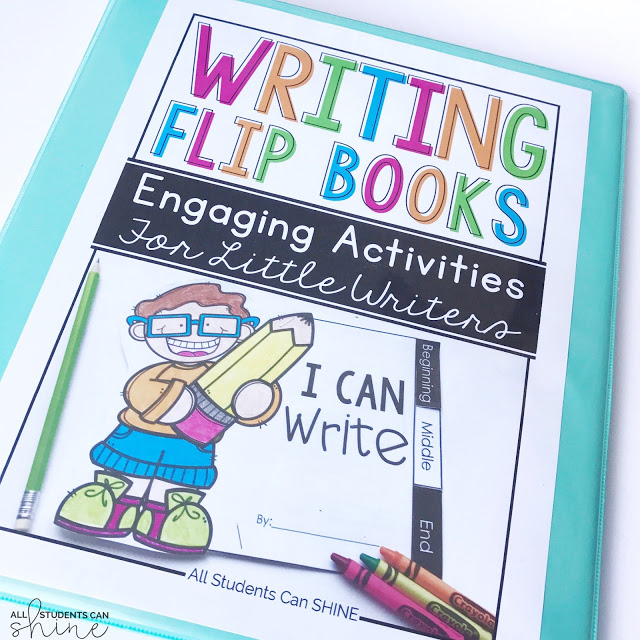
I keep all of the flipbooks in a single binder in our writing center.
Here’s how it works:
- Students browse the binder during Work on Writing time.
- They choose a flipbook that fits their writing idea.
- They select a cover they like.
- They begin writing their book.
This system gives students choice and independence, which keeps the writing center running smoothly while I meet with small groups.

Quick Teacher Tip
Before placing flipbooks in the center, I staple each set of pages together. Then all they need to add is their cover.
This way students always have the correct pages for each type of book, and I don’t need to stop small-group instruction to help them figure it out.
It’s a small step that saves a lot of time.

Try Flipbooks in Your Writing Block
If you’re looking for a simple way to help your students organize their ideas and feel excited about writing, flipbooks are a great place to start.
They provide the structure young writers need while still allowing creativity and choice.
Check out my full set of writing flipbooks to see all the formats and themes.
Happy writing!