It’s true that sequencing shows up everywhere in our students’ lives. Whether they’re lining up toys from biggest to smallest or predicting what happens after snack time, putting things in order is something children do naturally—with the right support and enough exposure.
But sequencing is more than just a helpful habit—it’s a foundational skill that builds attention, planning, memory, and even future writing success. Let’s talk about why it matters, how to build it into your day, and two simple resource packs that can help your students grow as readers and writers.
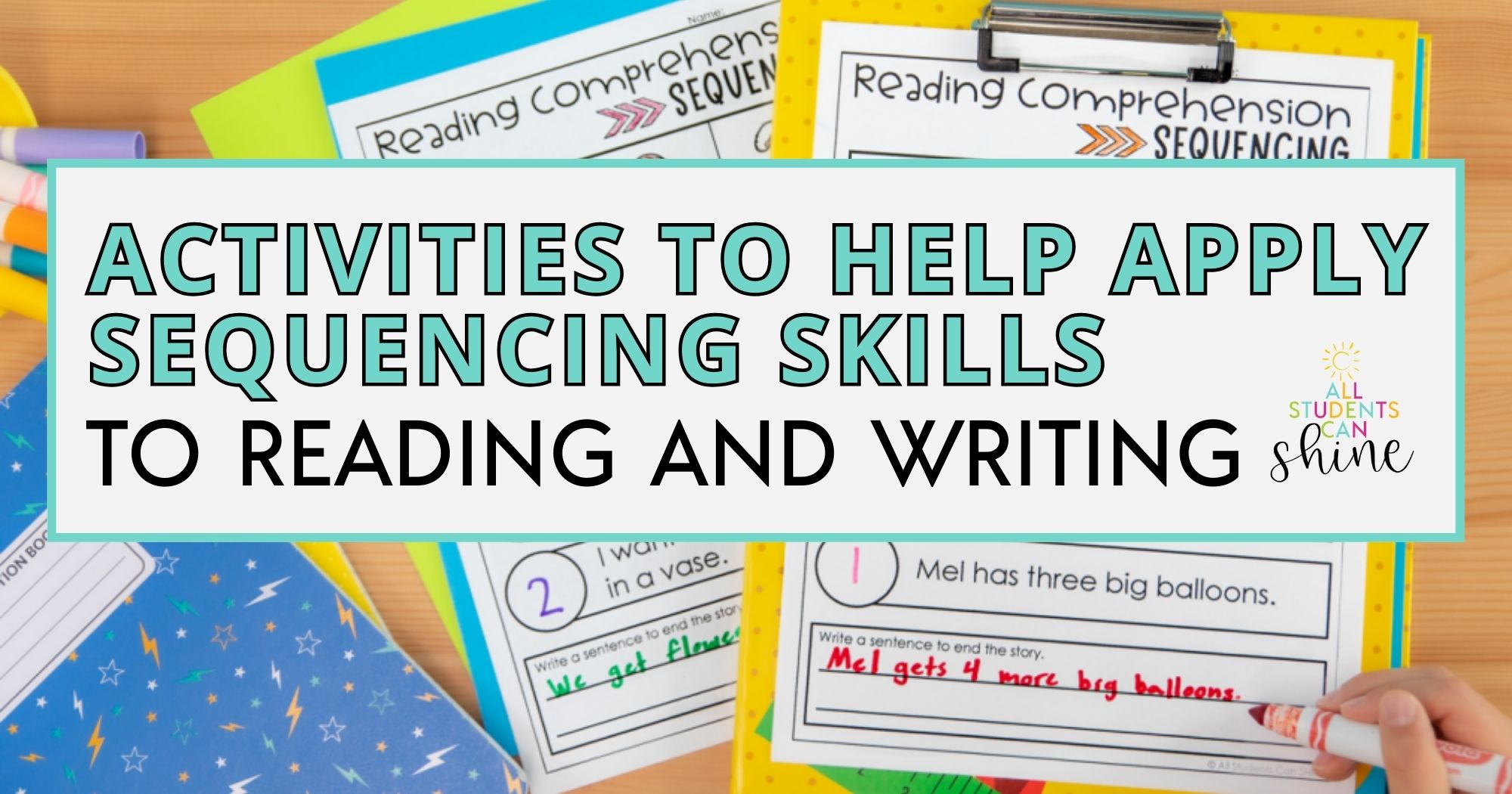
What Is Sequencing, and Why Does It Matter?
Sequencing is the ability to recognize patterns, understand order, and recall steps or events. This shows up in a child’s ability to:
- Follow classroom routines
- Retell stories in the correct order
- Use transition words like first, next, and last
- Recognize story elements like beginning, middle, and end
- Make predictions and connect ideas
- Organize their thoughts in writing
It also supports key executive function skills like planning, time management, organization, and self-control—which are especially important for students who struggle with attention or memory.
Quick Ideas to Build Sequencing Into Your Classroom Routine
You don’t need to dedicate an entire block to sequencing—it can be layered into your day with simple strategies:
- Use numbered lines or line-up songs with ordinal language (first, second, third…)
- Include sequencing visuals in classroom routines
- Create daily checklist cards for independent work
- Add “First → Then → Next” slides into your transitions
- Use predictable story structures during your read-alouds
- Build task completion steps into your centers or morning tubs
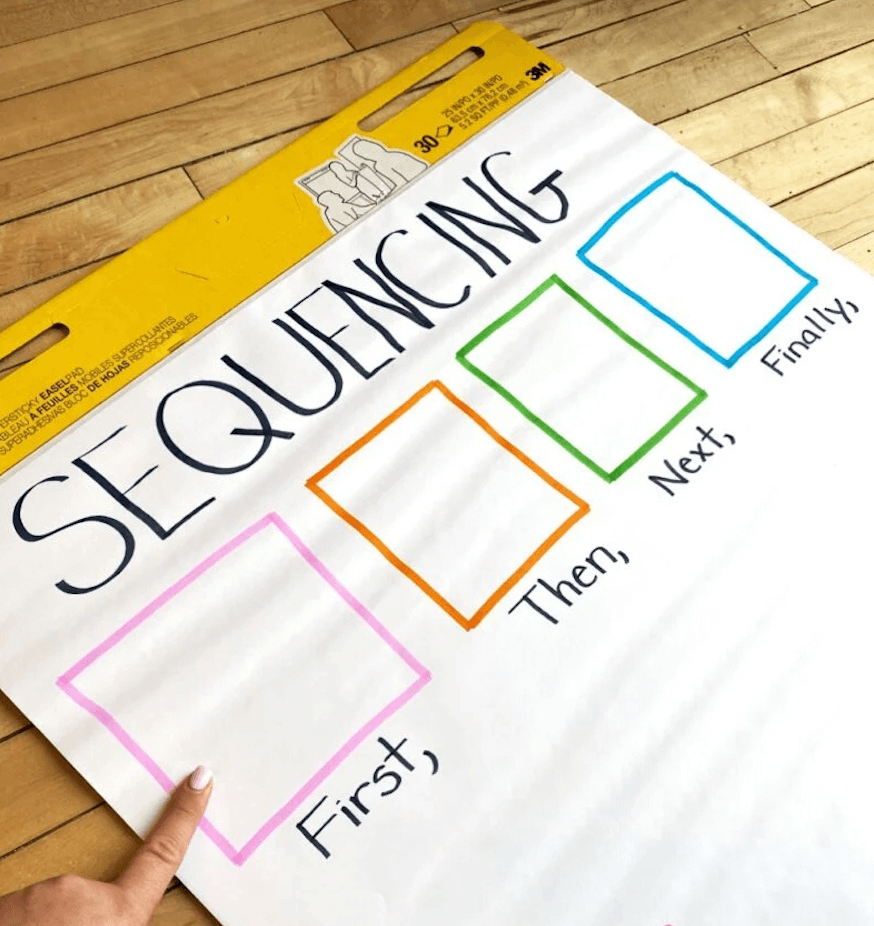
The key is repetition with visual and verbal cues, especially for students who need structure.
Literacy Sequencing Activities
If you’re looking for done-for-you tools that build sequencing skills while supporting your literacy goals, I’ve created two packs designed for independent practice and small group instruction.
FIRST, let’s start with the Reading Sequencing Pack.
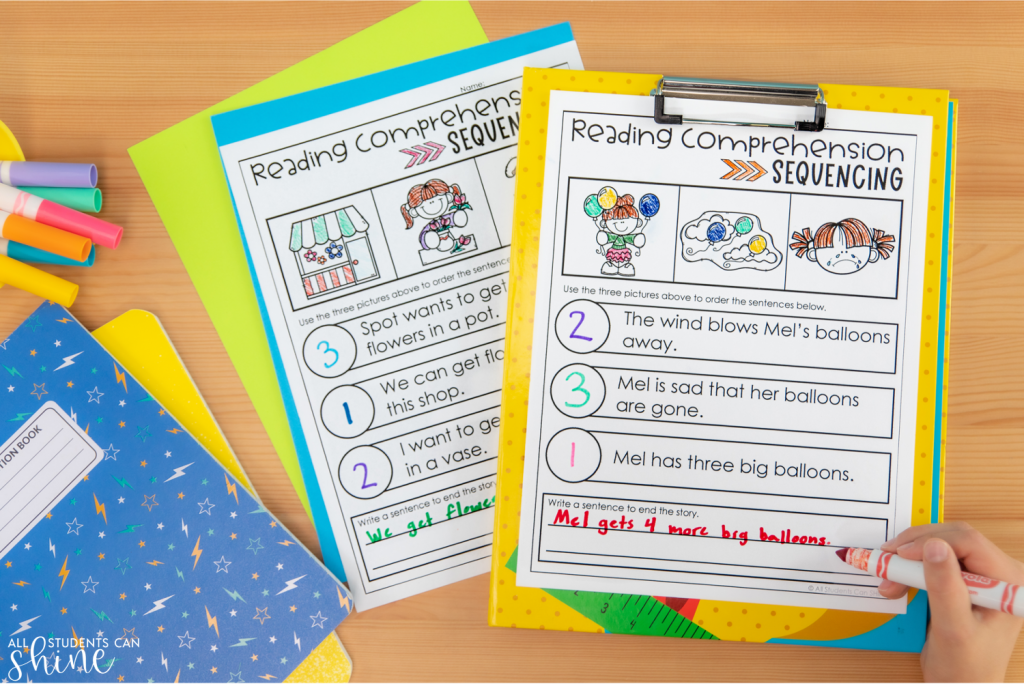
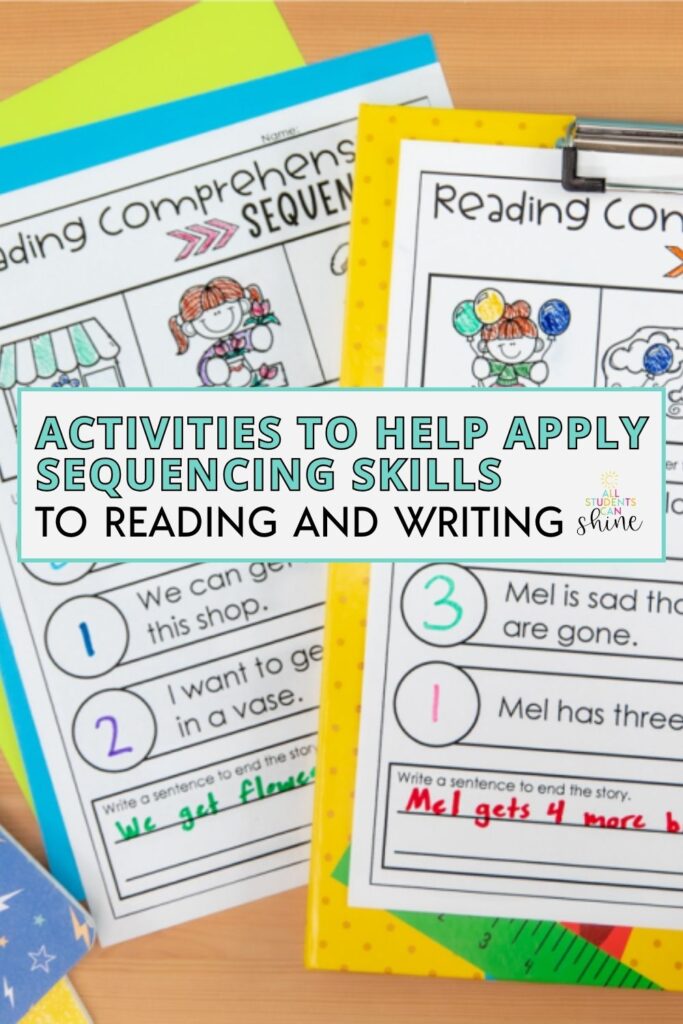
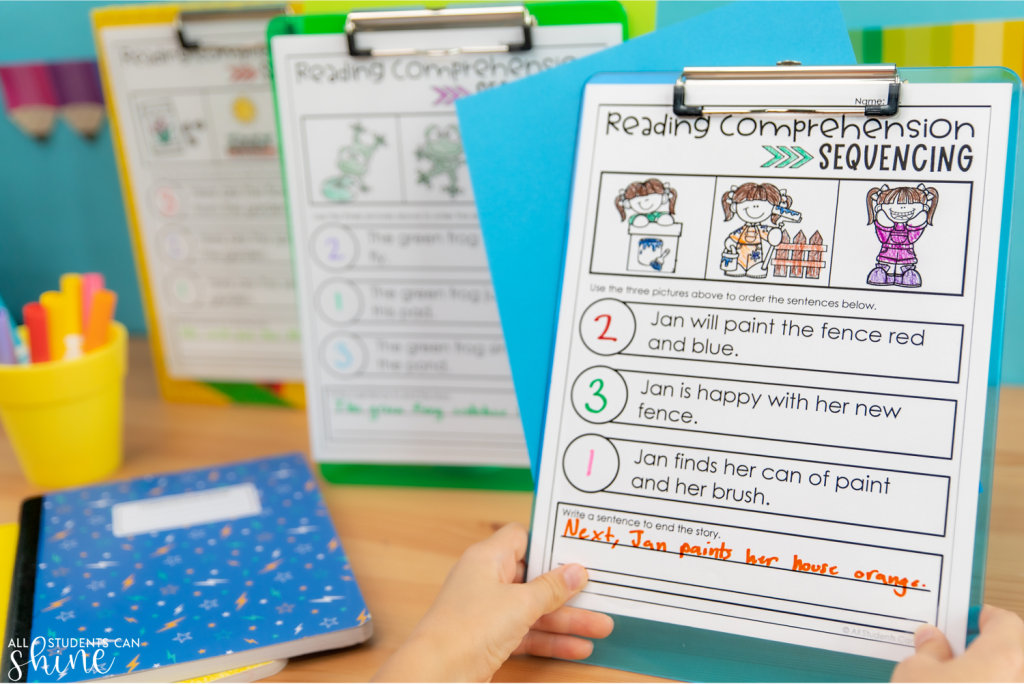
In this pack, download 30 activity sheets where students will go through the same steps to put a story in order.
1- Each page starts with three pictures that tell a story in order.
2-Underneath, there are three sentences that match the pictures that students will put in order by numbering them.
3- Finally, students will write a sentence to end the story.
NEXT, Check out my Writing Sequencing Pack.
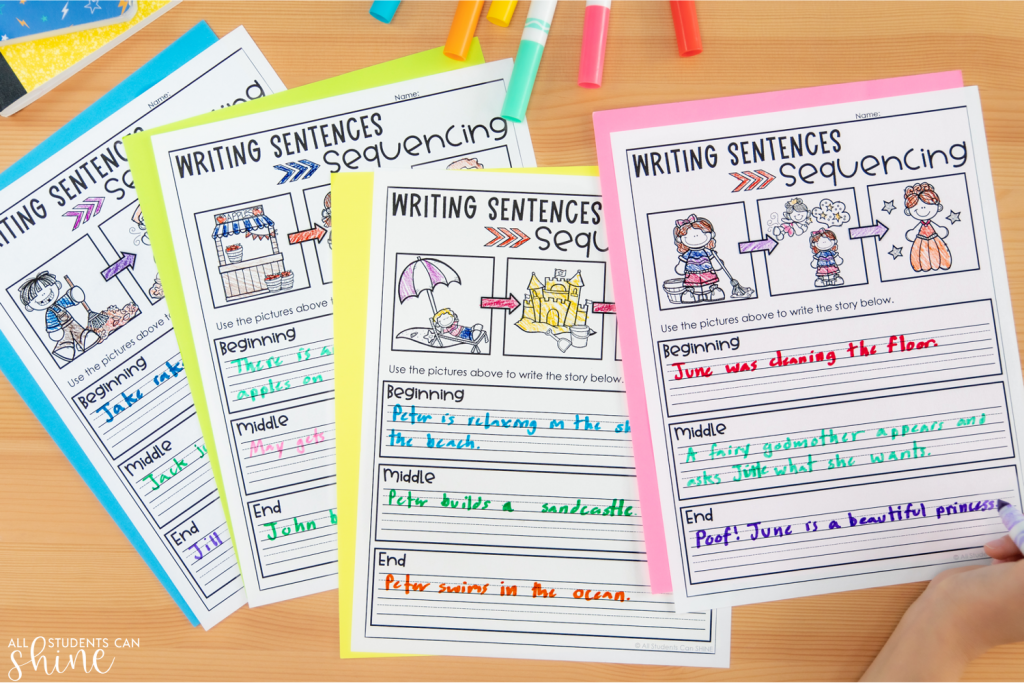
1- Start with pictures to tell a visual story in order
2- Below the pictures, there is a section to write three sentences that tell what happened in the beginning, middle, and end.
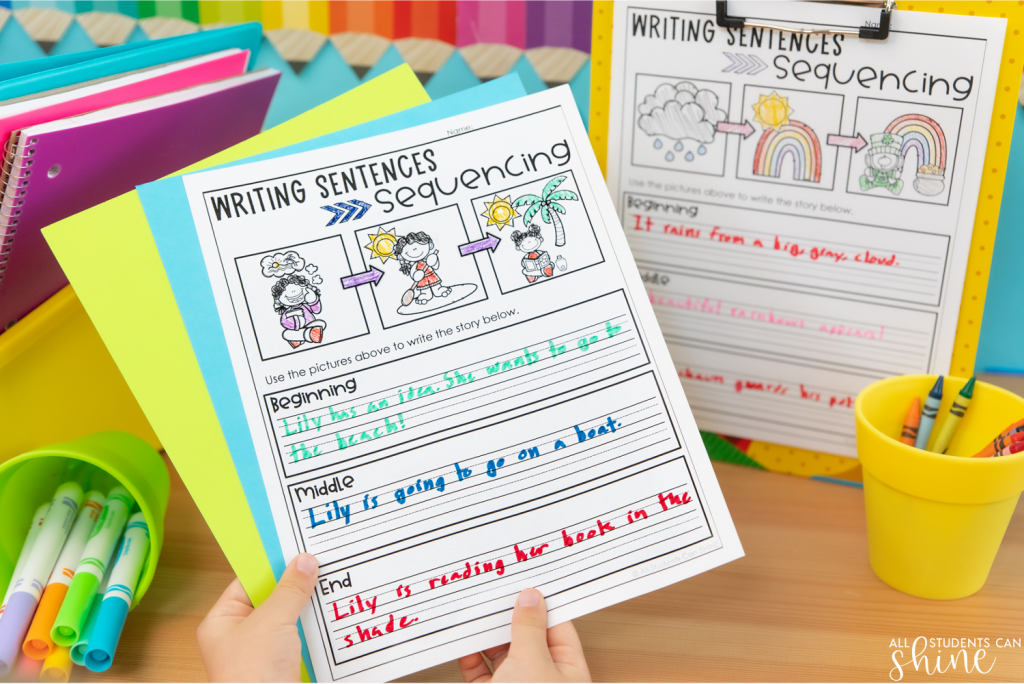
You can introduce each of these packs by practicing together as a class, and giving students more independence as you move through the stories until they are able to complete each page independently.
Teach It Together, Then Let Them Fly
You can model each activity together during mini-lessons, then gradually release responsibility as students get familiar with the steps. Both packs are designed to support repeated use, independent work, and meaningful practice all year long.
Try Both Packs for Just $1!
When you sign up for a 7-day free trial of All Access, you can download both the Reading and Writing Sequencing Packs for only $1 total.
✅ No obligations
✅ Cancel anytime
✅ Keep your downloads forever
👉 Download the Reading Sequencing Pack
👉 Download the Writing Sequencing Pack
Whether your students need a boost in retelling, planning, or organizing their thoughts, these resources are a low-prep way to build strong foundations—one story at a time.