If you’ve ever watched a student count all the way from 1 just to figure out what comes after 12, you’ve seen the power (and challenge) of number sense in K-1. Developing flexible thinking with numbers isn’t just about memorizing—it’s about building mental connections, understanding relationships, and feeling confident with how numbers work.
Thankfully, it doesn’t take hours of prep or a pile of worksheets. With a structured, playful approach, number sense can be taught through meaningful, hands-on lessons—and your students will love it.
What Does Number Sense Look Like in K-1?
In Kindergarten and 1st grade, number sense includes:
- Subitizing small quantities
- Recognizing and writing numbers
- Counting with purpose (not just reciting)
- Comparing and ordering numbers
- Understanding one more/one less
- Using tools like ten frames, number lines, and 120 charts
These foundational concepts support everything from addition and subtraction to word problems and place value.
Why It Matters More Than Ever
When students develop number sense early:
- They can explain their thinking and strategies
- They feel confident instead of frustrated during math time
- They’re ready for more complex math like operations and place value
- You spend less time reteaching or trying to “fill gaps”
Whether you’re teaching whole group, pulling small groups, or managing math centers, number sense work supports every math routine.
A Look Inside the Lucky to Learn Math Number Sense Unit for K-1
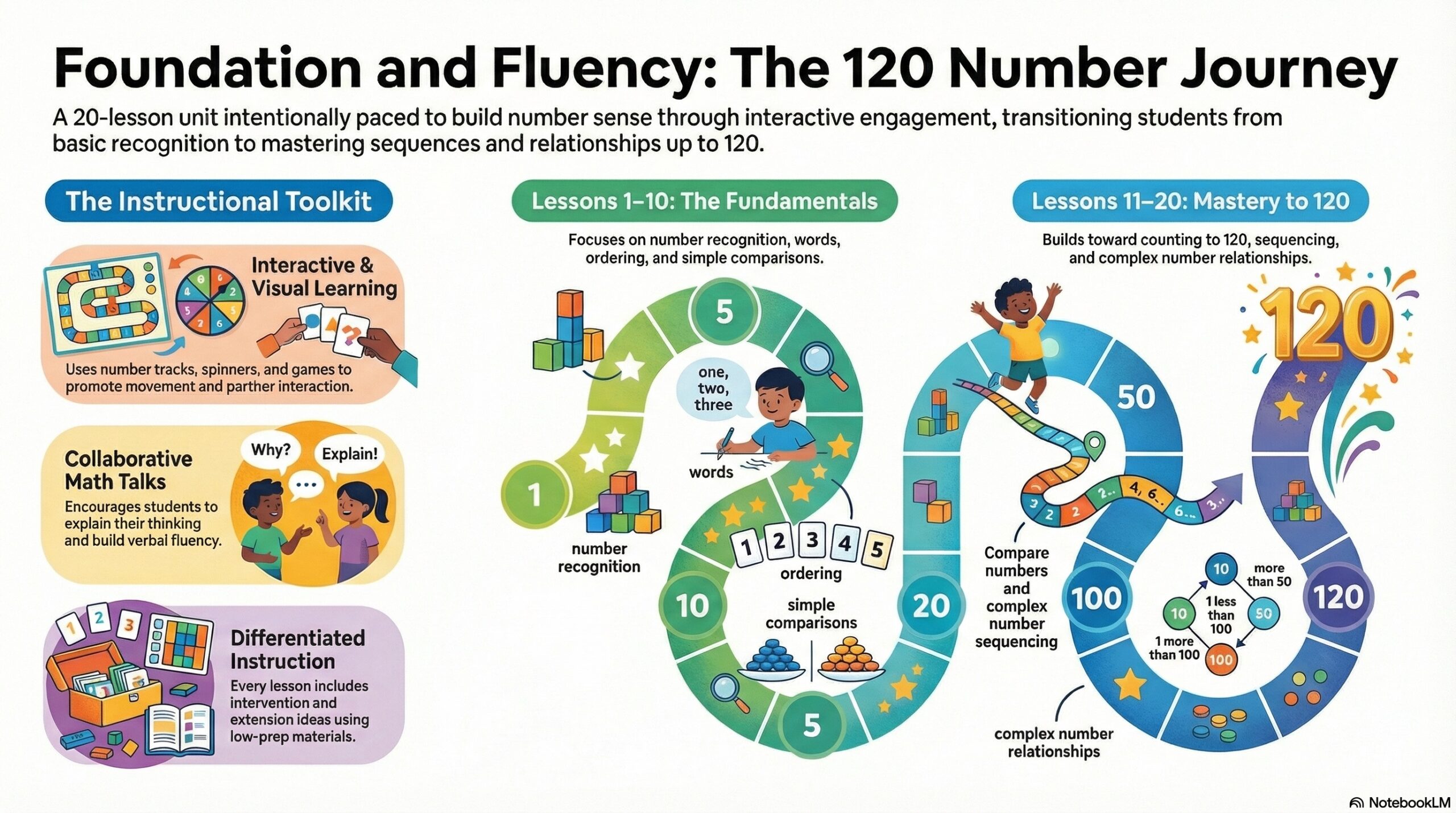
This 20-lesson unit is paced intentionally to build understanding over time. Here’s how it supports all learners:
- Mini-lessons with visual anchors (like number tracks, tallies, and spinners)
- Math talks that help students explain their thinking
- Games that promote movement and partner interaction
- Independent activities with simple, low-prep materials
- Intervention and extension ideas included with each lesson
The first 10 lessons focus on number recognition, number words, ordering, and simple comparisons. Lessons 11–20 build toward counting to 120, number sequencing, and number relationships.
Featured Lessons You’ll Want to Try
Lesson 1.1 – Subitizing + Numbers to 10
Students practice subitizing, number identification, and number formation using visual supports like fingers, ten frames, and dot patterns.
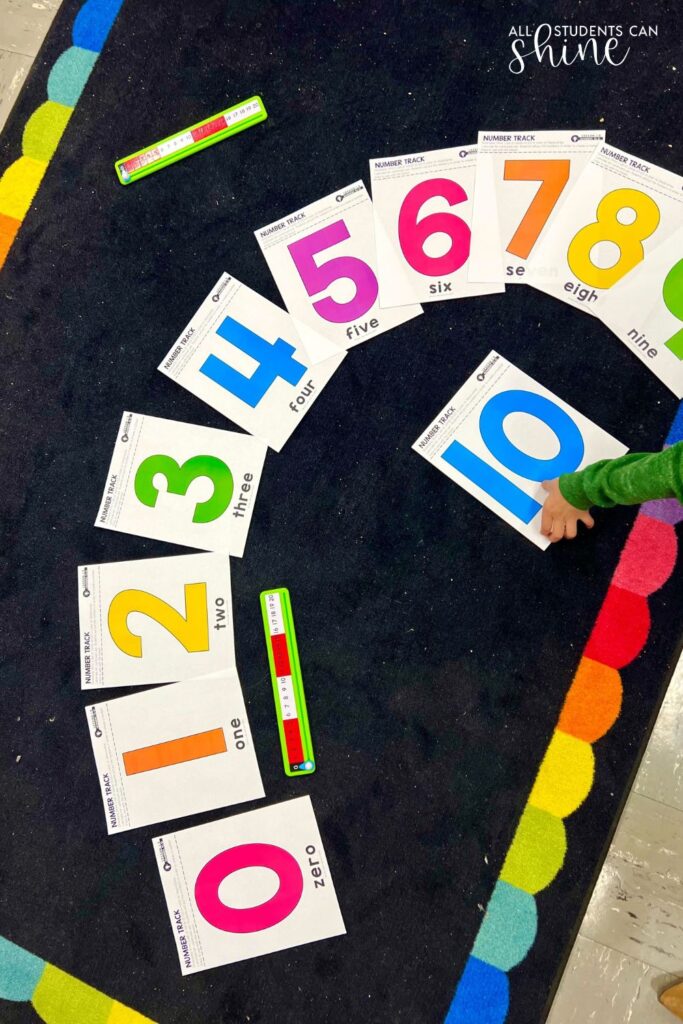
Lesson 1.5 – Number Order to 10
Using number tracks, students practice ordering numbers through cut-and-paste, movement, and partner discussion. The “Think About It” slide launches math talk, helping students describe number positions. It’s a great lesson for anchoring early numeracy and building student confidence
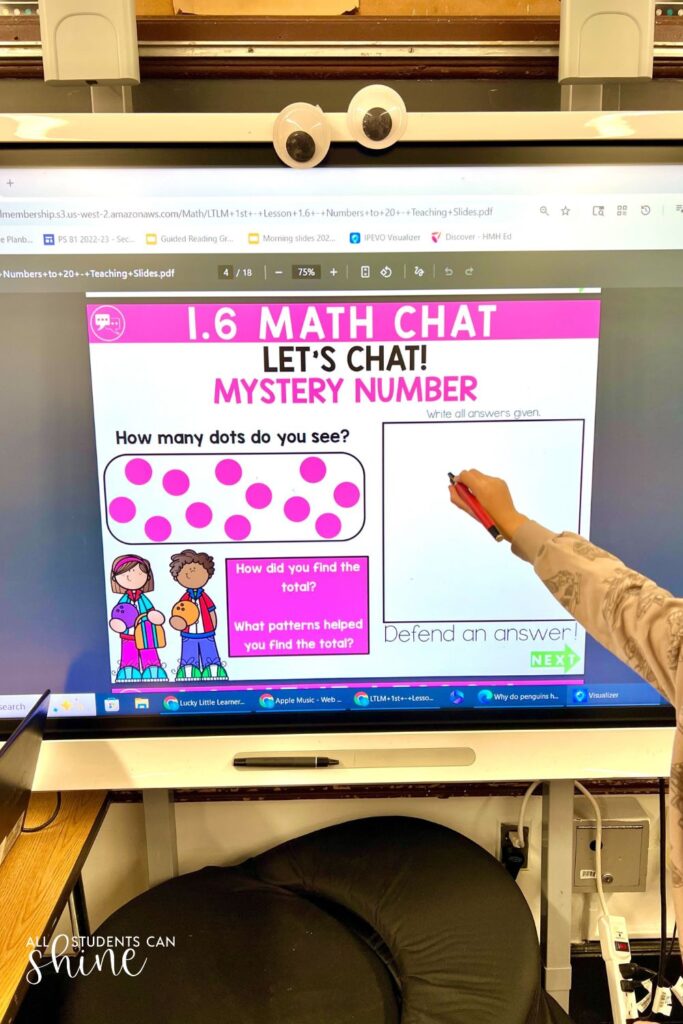
Lesson 1.6 – Subitizing and Mystery Numbers to 20
This lesson builds number sense by combining subitizing, counting, and number representation in multiple formats. Students begin with a Mystery Number routine, where they silently analyze dot patterns, make guesses, and defend their thinking with math talk. Then, they review numbers to 10 using fingers and anchor charts before expanding to numbers up to 20.
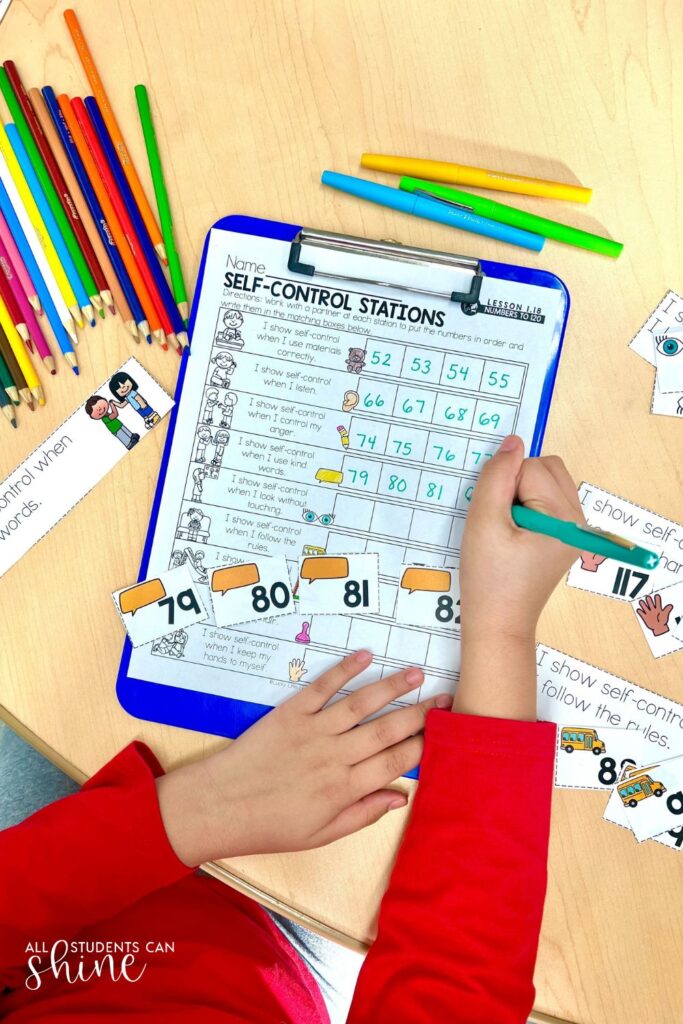
Lesson 1.18 – Numbers to 120: Ordering Stations
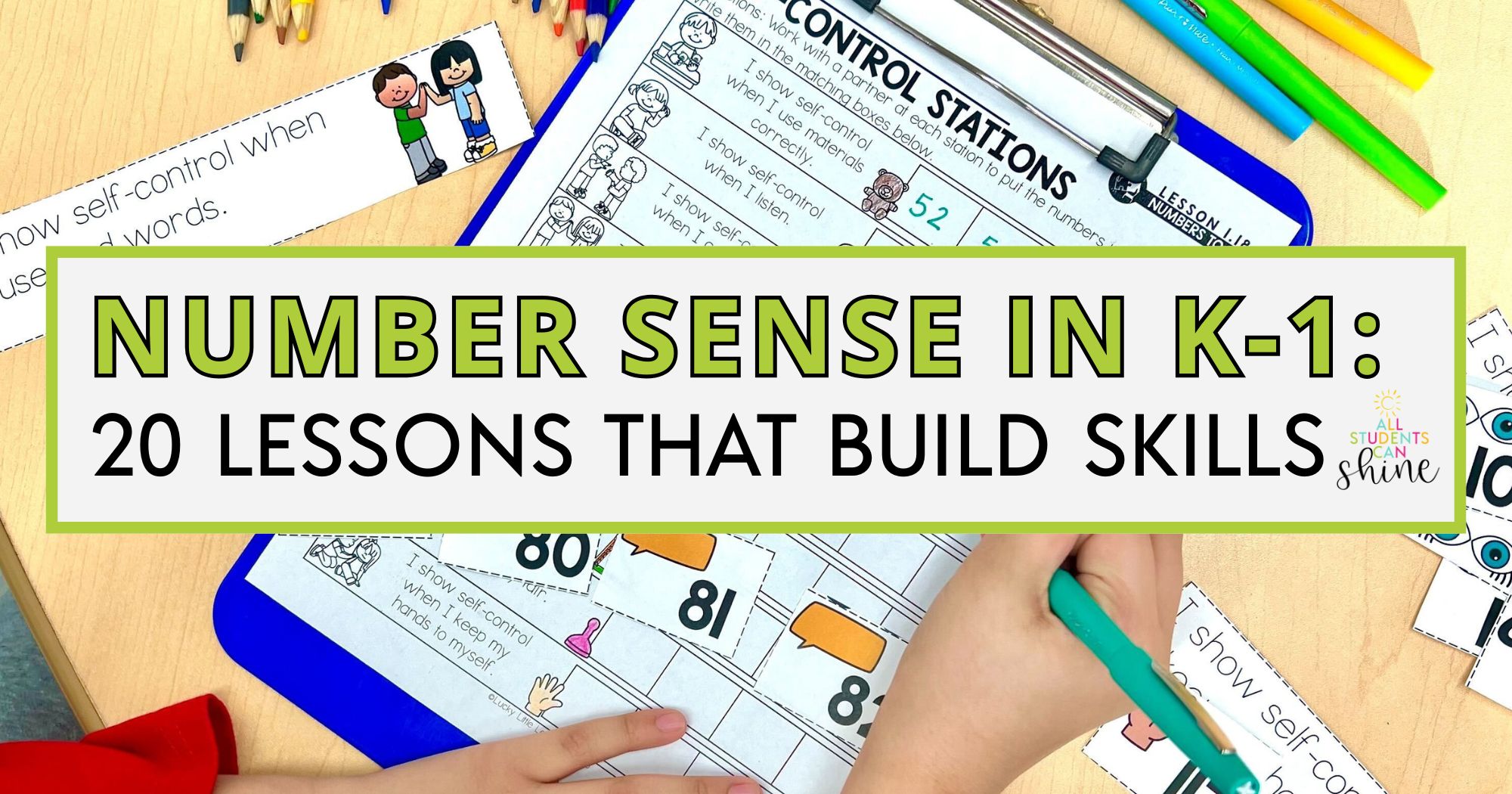
Students rotate through self-control stations, sorting numbers and practicing regulation cues like “I wait my turn” and “I keep my hands to myself” while working with counting sequences.
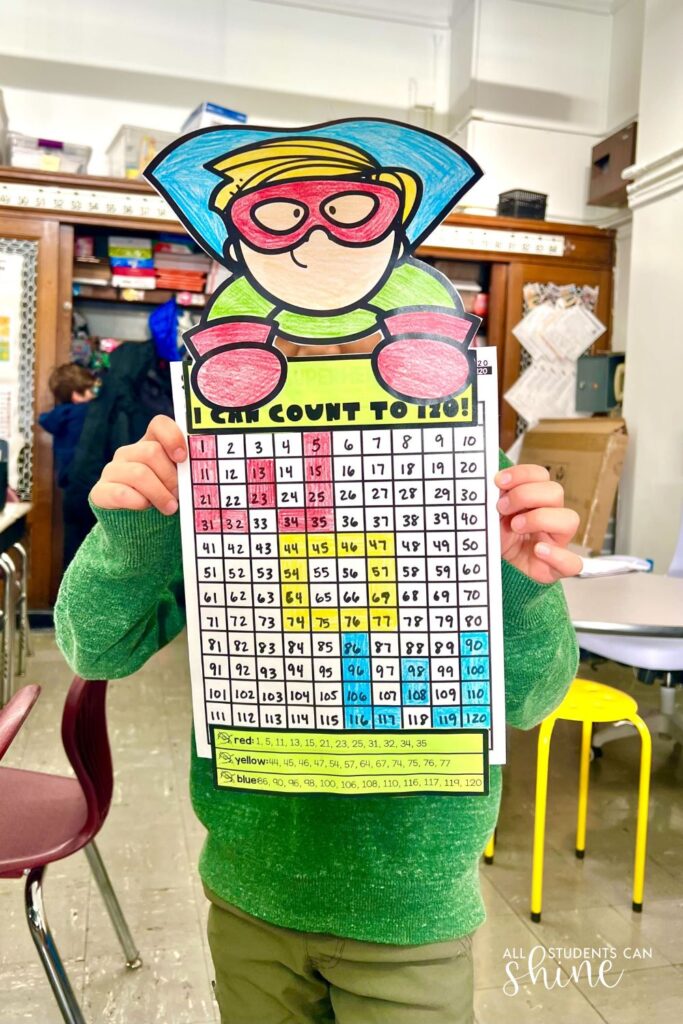
Lesson 1.20 – One More, One Less + Assessment
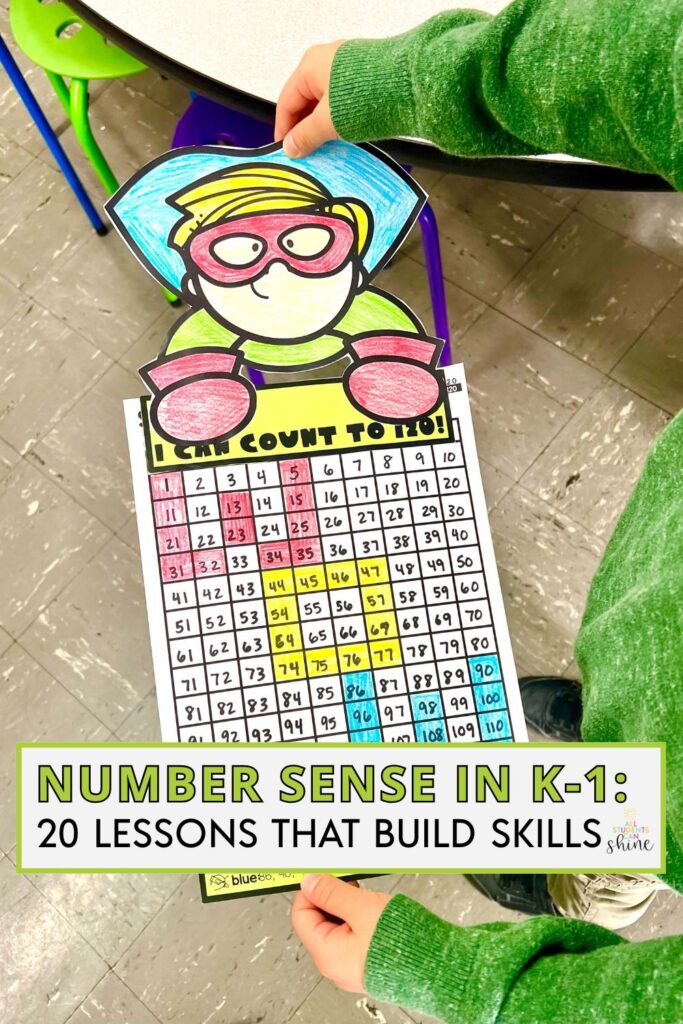
Includes Musical Numbers (an active counting game), a Solution Superhero Craft, and a built-in post-assessment to track growth and next steps.
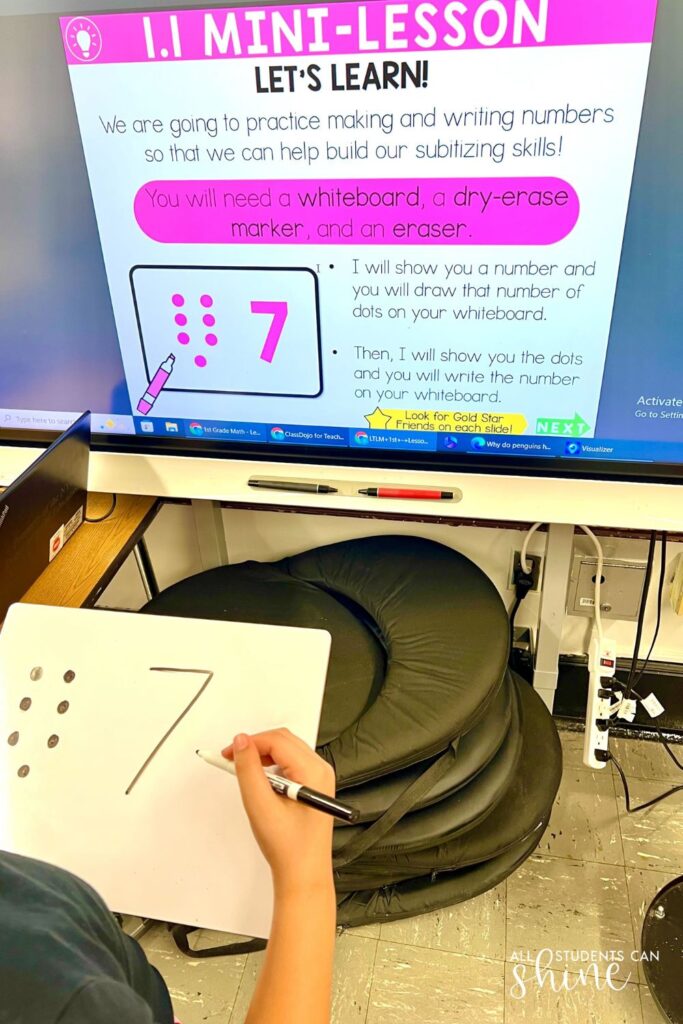
(1.1) teacher leading students in the subitizing activity on slide 13
(1.5) students creating the number track on the floor with slide 7 displayed behind them on the smart board
(1.6) mystery number slide displayed (slide 4) & student writing in answer on smart board
(1.18) self-control stations
(1.19) Solution Superhero Craft
Why Teachers Love This Unit
This unit was built with your real classroom needs in mind:
- Clear lesson routines that reduce decision fatigue
- Reusable tools and familiar formats across lessons
- SEL integration through visual cues and social problem-solving
- Options for independent work, partner games, and small group tasks
It also works beautifully with your digital teaching tools: each lesson’s resources are easy to store, search, and print on demand—great for teachers organizing with Google Drive or planning on a Sunday night.
Need more tips for streamlining math centers or storing your resources digitally? Check out these practical strategies for teaching math without the overwhelm.
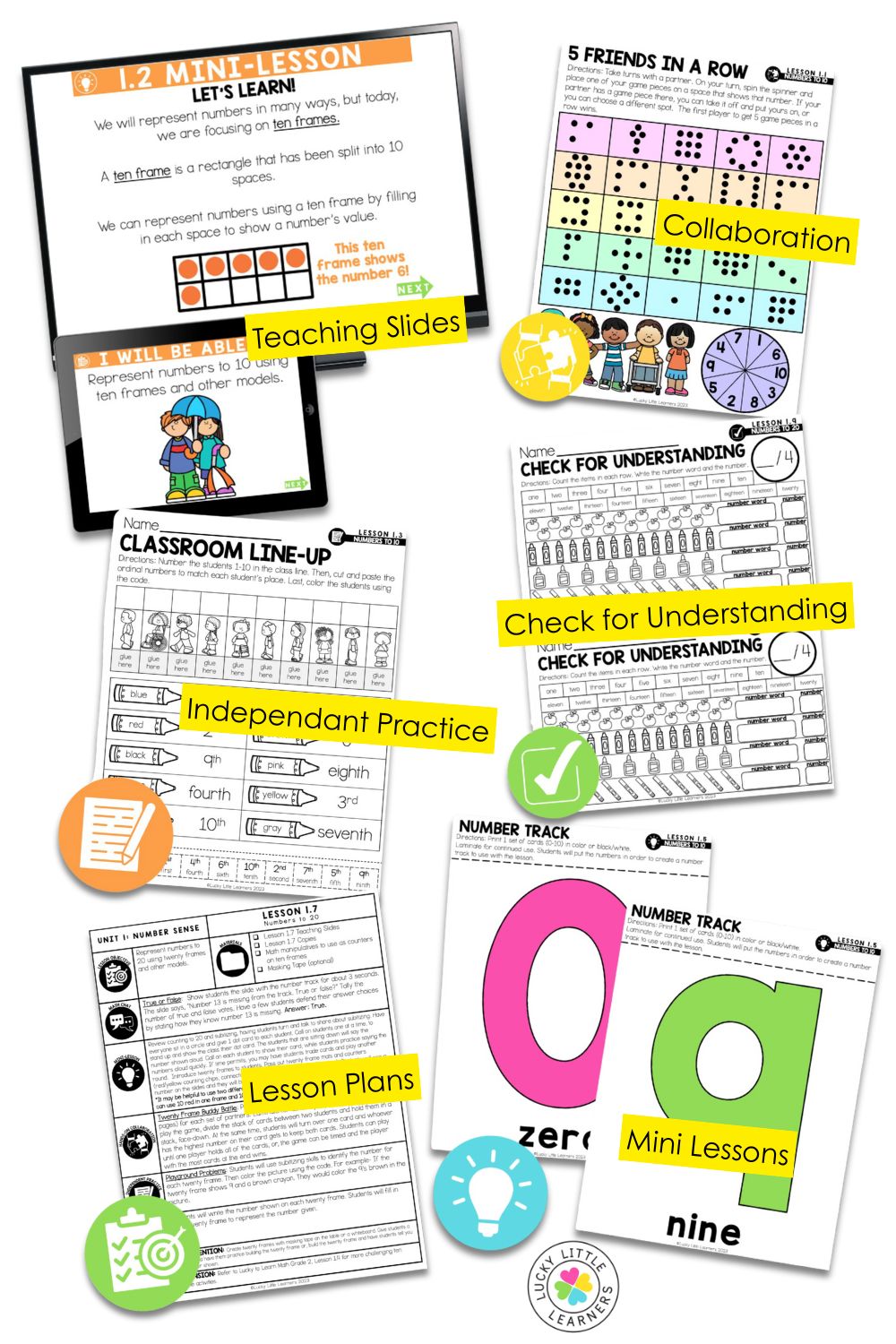
Grab all 20 Number Sense Lessons for Just $1
There’s no need to piece together number sense lessons one by one. This full 20-lesson unit gives you:
- Engaging, hands-on math experiences that support every learner
- Ready-to-use slides, games, printables, and assessments
- Scaffolds and extensions already built in