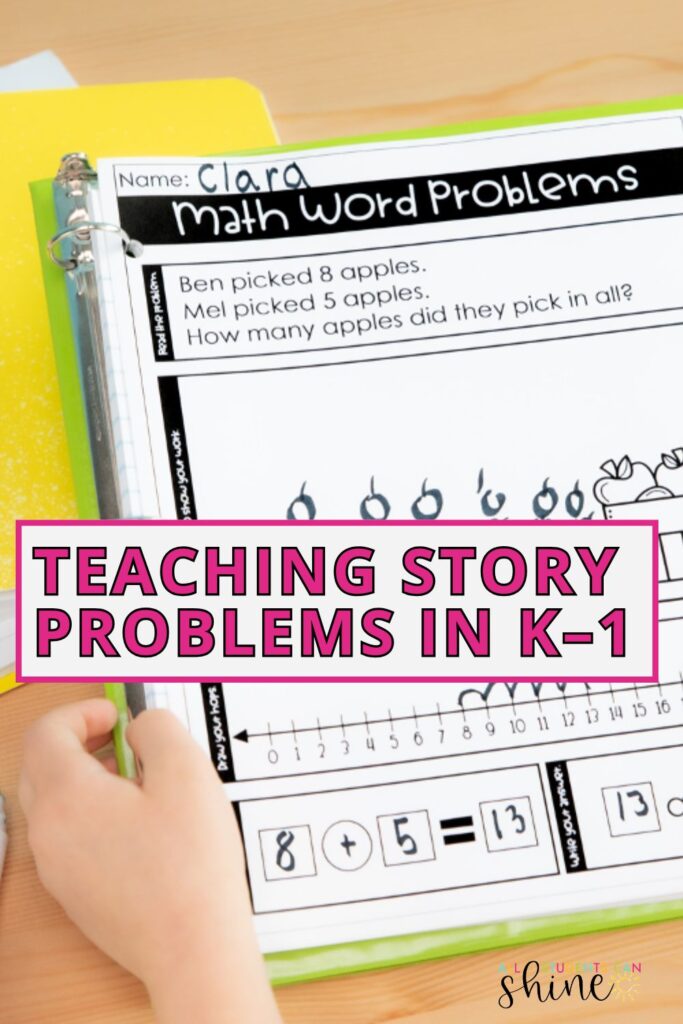
Helping young learners solve story problems can feel tricky. Many students who can add or subtract just fine still freeze when they see a word problem.
Why does this happen?
Story problems require students to combine reading comprehension, number sense, and problem-solving strategies all at once. When one of those pieces is missing, the whole process feels overwhelming.
The good news: with the right teaching approach, students can learn to tackle story problems with confidence.
Let’s start by looking at the most common challenges.
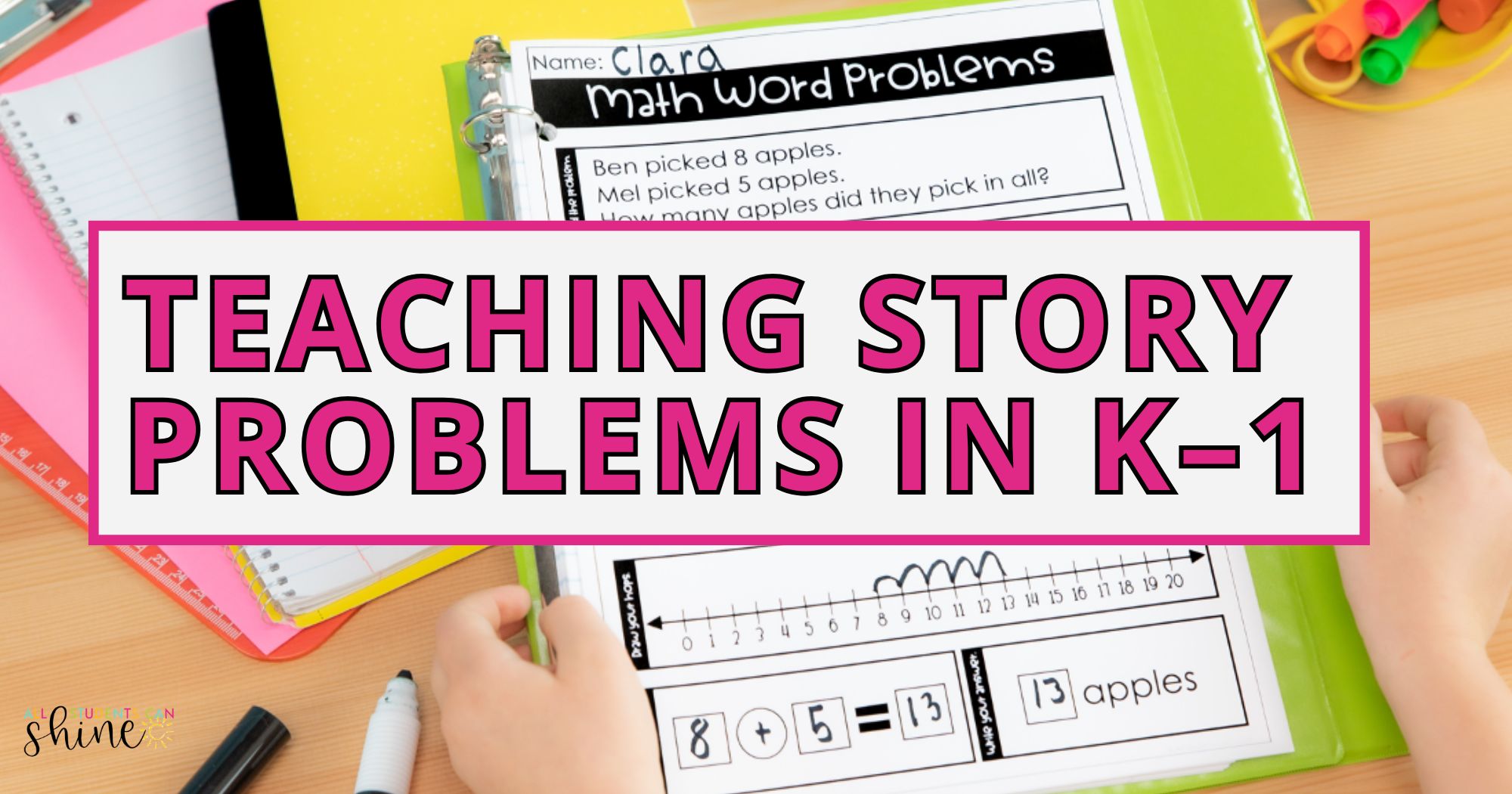
Why Students Struggle With Story Problems
1. The problems don’t feel meaningful
Many traditional math problems simply don’t make sense to kids.
A problem like “Someone bought 57 watermelons…” doesn’t connect to a child’s real life. When students can’t picture the situation, the numbers become meaningless.
Solution: Make story problems relatable.
Use situations your students actually experience:
- sharing snacks
- trading stickers
- collecting Pokémon cards
- lining up for recess
- classroom supplies
When problems reflect students’ lives, they are much more motivated to solve them. Use your students’ language and interests while still introducing math vocabulary.
2. Students struggle with multi-step thinking
Many students struggle with complex problems because they never fully mastered single-step problem solving.
Teachers often feel pressure to move quickly through the curriculum, but problem-solving skills grow best when students build them step by step.
Solution: Teach one step at a time.
Before expecting students to solve complete problems, focus on:
- understanding the situation
- identifying the question
- choosing a strategy
Once students feel confident with each step, they can combine them together.

3. Reading challenges make math harder
Story problems require reading comprehension. For students with language or reading difficulties, the text alone can feel overwhelming.
Solution: Teach math vocabulary and key words explicitly.
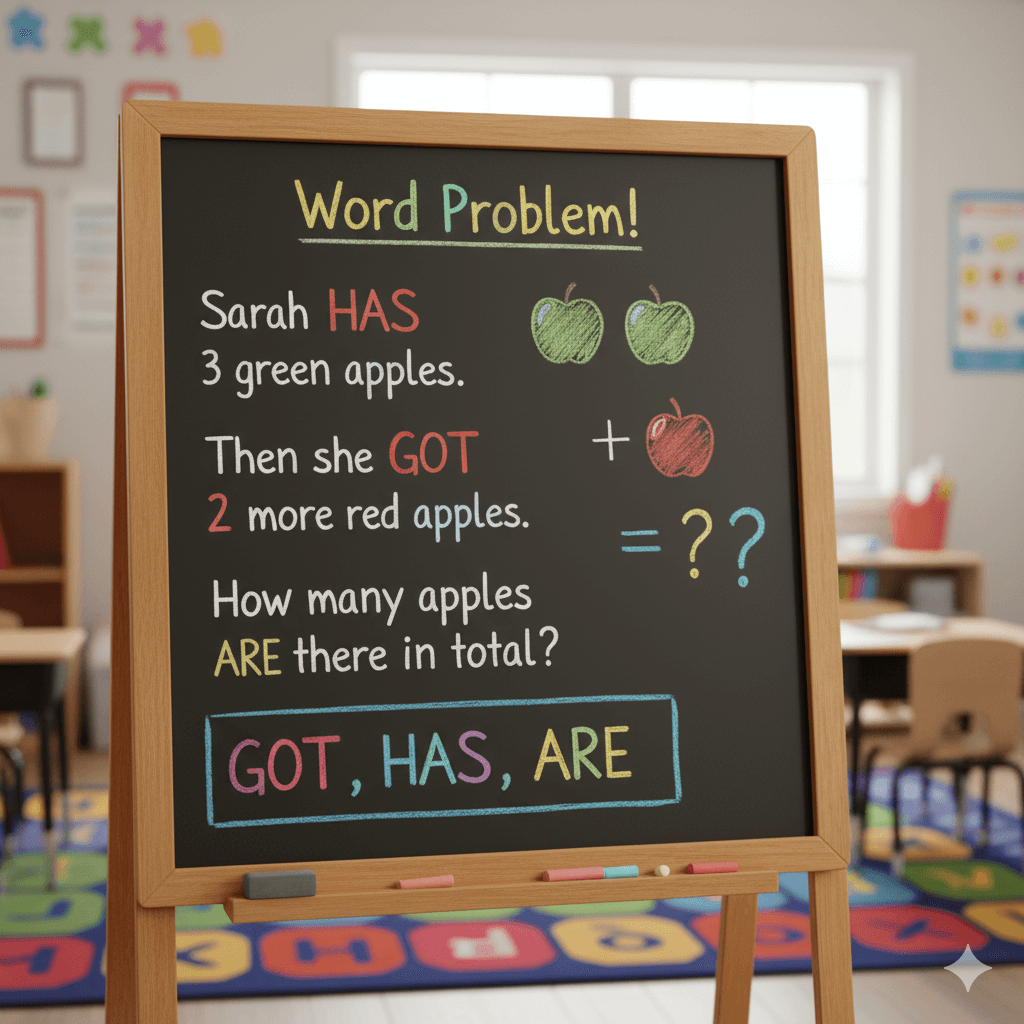
Students need practice recognizing words that signal mathematical actions, such as:
- altogether
- in all
- how many left
- how many more
Use anchor charts, posters, and math centers that help students practice connecting vocabulary with operations.
A Simple 4-Step Process for Teaching Story Problems
Once students understand the common roadblocks, you can introduce a clear routine for solving story problems.
1. Understand the Problem
Encourage students to slow down and focus on comprehension first.
Try these strategies:
- Read the problem more than once
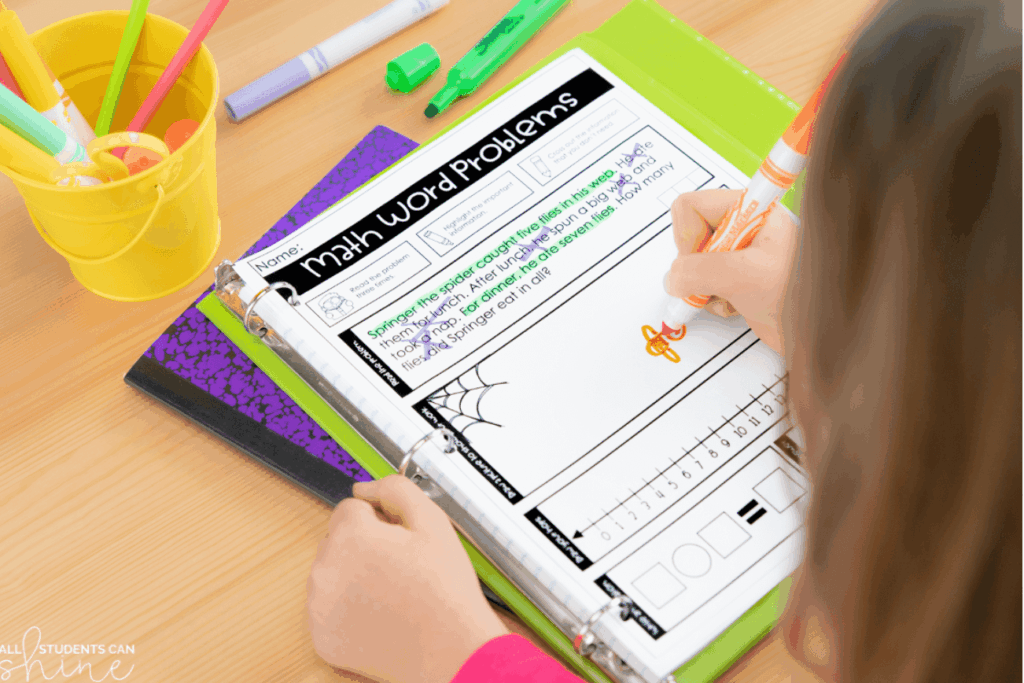
- Highlight important information
- Cross out details that are not needed
- Turn to a partner and explain the problem in their own words
- Identify the question being asked
Students should fully understand the situation before trying to solve it.
2. Make a Plan
Next, students decide how they will solve the problem.
You can model several strategies, such as:
- acting out the problem
- drawing a picture
- building a model
- using a chart
- using number lines
- using ten frames
- using number bonds
Giving students multiple strategies helps them find the one that works best for their thinking.
3. Solve the Problem
Many students jump straight to the answer and skip the thinking process.
Instead, focus on showing the strategy first.
For example, in primary grades students often solve problems by drawing pictures. Practice problems where students only draw the model first before writing the equation.
Later, add the equation and final answer.
This helps students understand that the process matters, not just the answer.
4. Check the Solution
Checking answers builds strong problem-solving habits.
One of the best ways to check is by solving the problem a second way.
Example:
If students drew a picture to solve 5 owls + 4 falcons, they could check their work using a number line.
Another effective strategy is partner comparison. When students explain their thinking to a classmate, they often catch mistakes and deepen their understanding.
Math talk is a powerful learning tool.
No-Prep Tools for Teaching Story Problems
If you want ready-to-use resources to support story problem instruction, these tools can save time and help students build confidence.
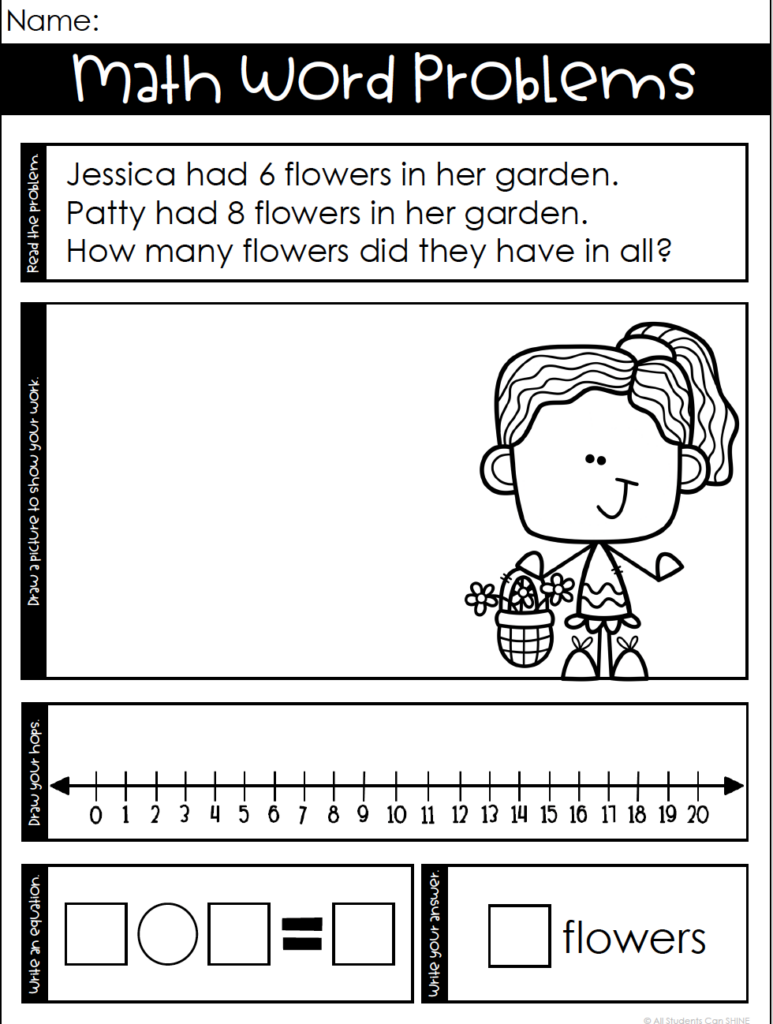
Addition Story Problems
Give students engaging, relatable addition problems that help them practice understanding the situation, choosing a strategy, and showing their thinking.
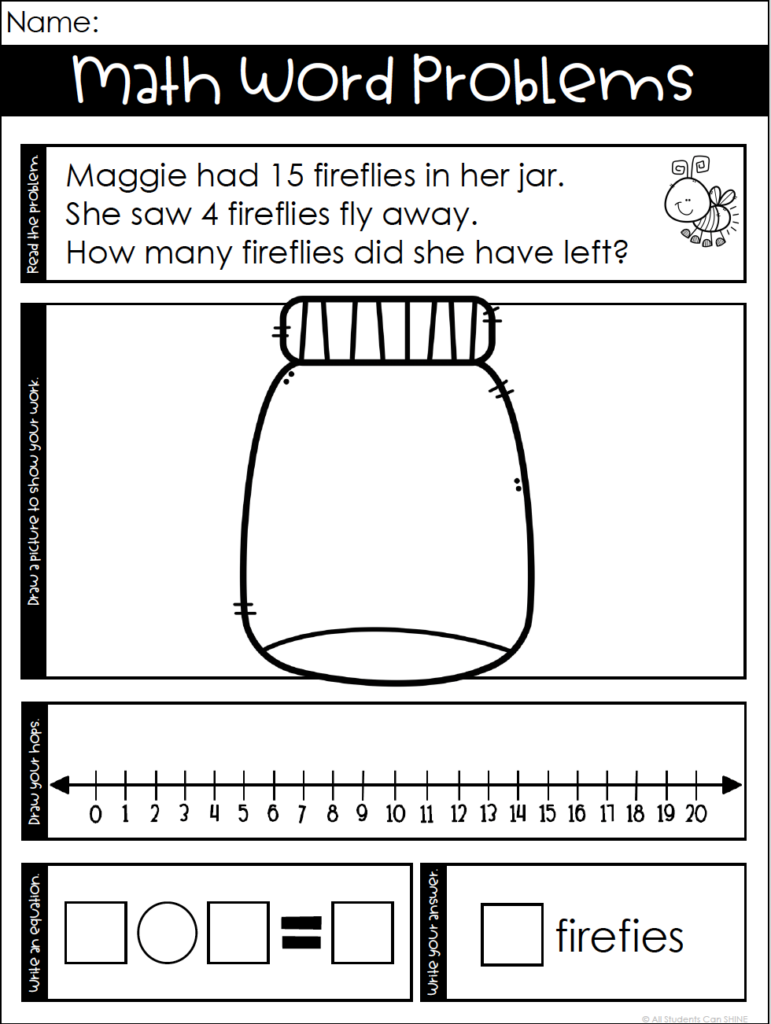
Subtraction Story Problems
Support students as they learn how to interpret subtraction situations like taking away, comparing, and finding the difference.
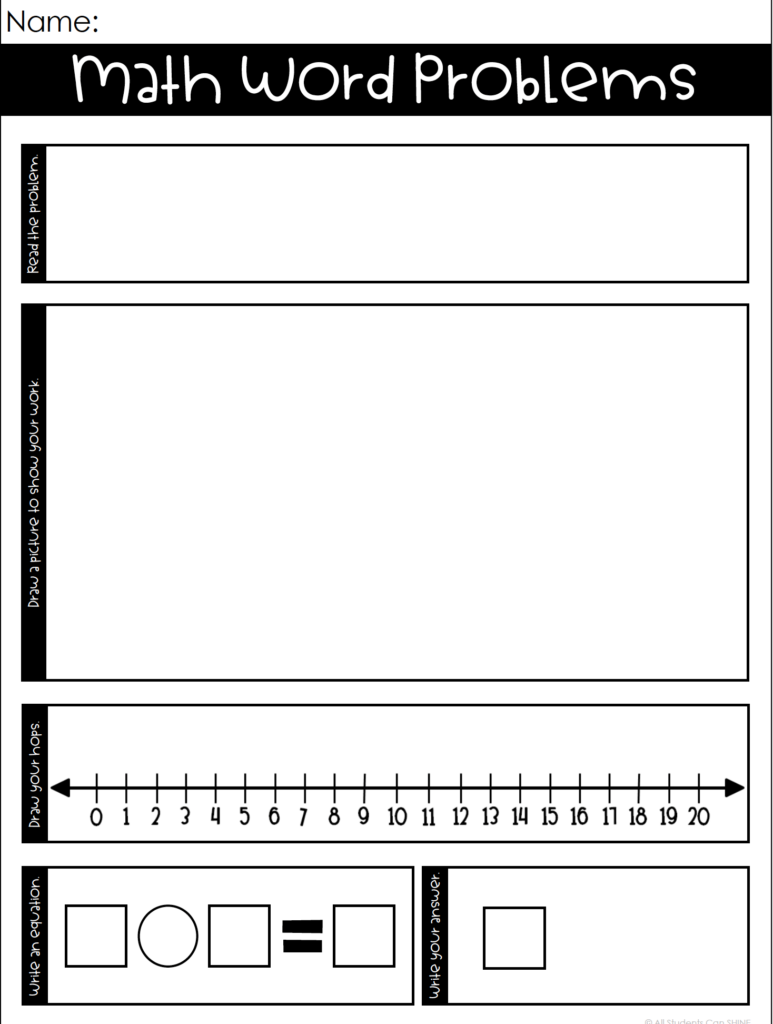
Editable Story Problem Templates
Want to create story problems that match your students’ interests?
Use the editable template to quickly write your own problems using familiar names, classroom situations, and topics your students love.
When story problems feel meaningful and students have a clear process to follow, problem solving becomes much less intimidating—and much more successful.